
Non-emergency medical transportation (NEMT) providers face a myriad of challenges in ensuring timely arrivals and effective route planning for their clients. Among the most pressing of these challenges is the ability to accurately predict estimated time of arrival (ETA) and adjust plans in real-time to mitigate delays. As the demand for reliable transportation services increases, the need for AI-powered solutions that streamline operations, reduce delays, and optimize scheduling has never been greater.
In this post, we’ll explore how integrating artificial intelligence (AI) into NEMT operations can not only enhance ETA predictions but also drive overall operational efficiency, benefiting both providers and the passengers they serve.
1. Understanding the Importance of Accurate ETA Predictions in NEMT Operations
At the heart of any successful NEMT operation is the ability to deliver on-time service. Passengers relying on NEMT services—often individuals with medical conditions—depend on timely arrivals to reach their medical appointments and treatments. Missed or delayed rides can result in missed appointments, a reduced level of care, and increased stress for clients.
AI-powered ETA predictions allow for a deeper understanding of travel conditions, such as traffic patterns, road closures, and real-time weather conditions. By integrating these advanced technologies into their operations, NEMT providers can generate more accurate ETAs and improve their capacity to adjust dynamically to unexpected delays, ensuring they meet their clients' needs more effectively.
2. How AI Enhances ETA Predictions and Reduces Delays
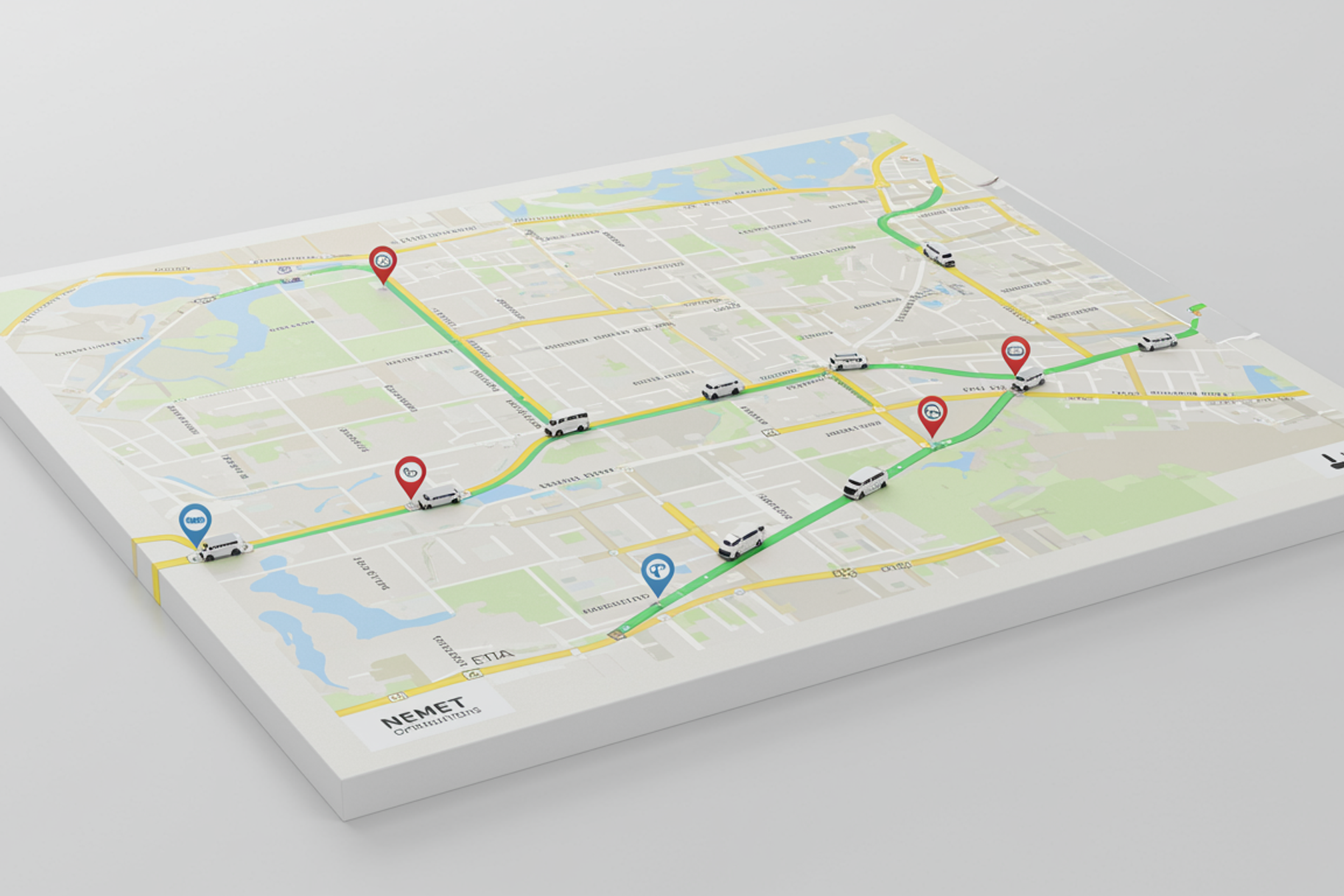
AI’s ability to process vast amounts of data in real-time sets it apart from traditional methods of route planning. With AI, NEMT software can continuously analyze data from various sources, including GPS tracking, traffic reports, and historical patterns, to adjust ETA predictions. By incorporating these real-time factors, AI systems can:
- Account for Traffic Fluctuations: Traffic conditions often change unexpectedly, especially in urban areas. AI-powered systems can predict how congestion, accidents, or road closures will impact travel times.
- Predict Route Optimizations: AI can suggest alternative routes in real-time, ensuring that drivers avoid delays and navigate more efficiently.
- Consider Passenger Needs: AI can also account for specific passenger requirements (e.g., wheelchair accessibility or the need for a stretcher), factoring these into the ETA and route planning.
These capabilities help NEMT providers minimize delays, reduce fuel consumption, and improve overall on-time performance.
Ready to streamline your transportation workflow?
Discover how an all-in-one NEMT solution can automate scheduling, plan routes and simplify billing so you can focus on delivering exceptional care.
3. Optimizing Route Planning for Greater Efficiency
Route planning is a critical aspect of NEMT operations. Inadequate planning can lead to longer travel times, excessive fuel consumption, and delayed arrivals. AI-driven NEMT software plays a key role in optimizing these routes by continually adapting to changing circumstances, including:
- Dynamic Routing Adjustments: AI allows for the adjustment of routes based on real-time conditions such as weather, accidents, or road closures. This flexibility ensures that drivers can avoid delays and reach their destinations efficiently.
- Historical Data Integration: AI systems analyze past data, including traffic patterns, time of day, and geographical factors, to predict the best routes for a given journey.
- Real-Time Re-Routing: In cases where unforeseen circumstances arise, AI can make real-time decisions to reroute drivers to prevent delays and ensure on-time arrivals.
By using AI to optimize routes, NEMT providers can reduce operational costs, improve driver productivity, and provide better service to their clients.
4. The Role of AI in NEMT Dispatch Solutions and Scheduling Software
Effective scheduling and dispatching are central to NEMT operations. When done manually, this process can be error-prone, time-consuming, and inefficient. AI-driven NEMT dispatch solutions, however, provide real-time scheduling and dispatching capabilities, ensuring that drivers are dispatched to the most suitable locations at the right times. Key benefits include:
- Optimized Driver Allocation: AI systems can automatically allocate trips based on a variety of factors, including location, driver availability, and vehicle type, ensuring that the best resource is assigned to each trip.
- Real-Time Adjustments: If a driver is running late or a new booking comes in, AI can quickly adjust the schedule and dispatch an alternative driver or vehicle to meet demand.
- Improved Scheduling Efficiency: AI can help prevent double-bookings and reduce idle times by optimizing the entire scheduling process.
These advancements lead to a significant improvement in the overall efficiency of NEMT providers, ensuring that vehicles are used to their maximum potential, schedules are adhered to, and passengers are transported safely and on time.
5. Conclusion: Leveraging AI to Improve NEMT Operations
AI technology is transforming the way NEMT providers approach ETA predictions, route planning, and scheduling. By incorporating AI into their operations, providers can enhance the accuracy of ETA predictions, reduce delays, and improve the overall quality of service they offer. With the ongoing advancements in AI, NEMT software is becoming more efficient and reliable, helping providers meet the demands of their passengers while optimizing their operations.
Call to Action: Want to learn more about how AI can improve your NEMT operations? Request a demo today to see how our AI-powered NEMT solutions can help you enhance your service and drive better outcomes for your passengers.
Related Articles
Best NEMT Software for California Transportation Providers: Medi-Cal, Multi-Broker, and Fleet Automation
Discover why NEMT Platform is the best NEMT software in California, offering live OVERSIGHT dispatch, multi-broker auto-billing, and a 24/7 multilingual AI receptionist.
Medi-Cal NEMT vs Uber/Lyft: California CalHHS Policy Guide
Medi-Cal pays for Uber and Lyft rides under the NMT benefit for ambulatory members, but wheelchair and gurney patients require a certified NEMT provider.
NEMT Billing Explained: From Trip to Paid Claim (2026)
How NEMT billing really works in 2026: the claim lifecycle, why claims get denied, EVV and compliance, and how the right billing software gets you paid faster.
Executive Guide to NEMT: Margin, Risk & Technology
For NEMT leadership: why margins are compressing, the three exposures the C-suite owns, and how technology decisions protect the P&L at enterprise scale.