
Table of contents▼
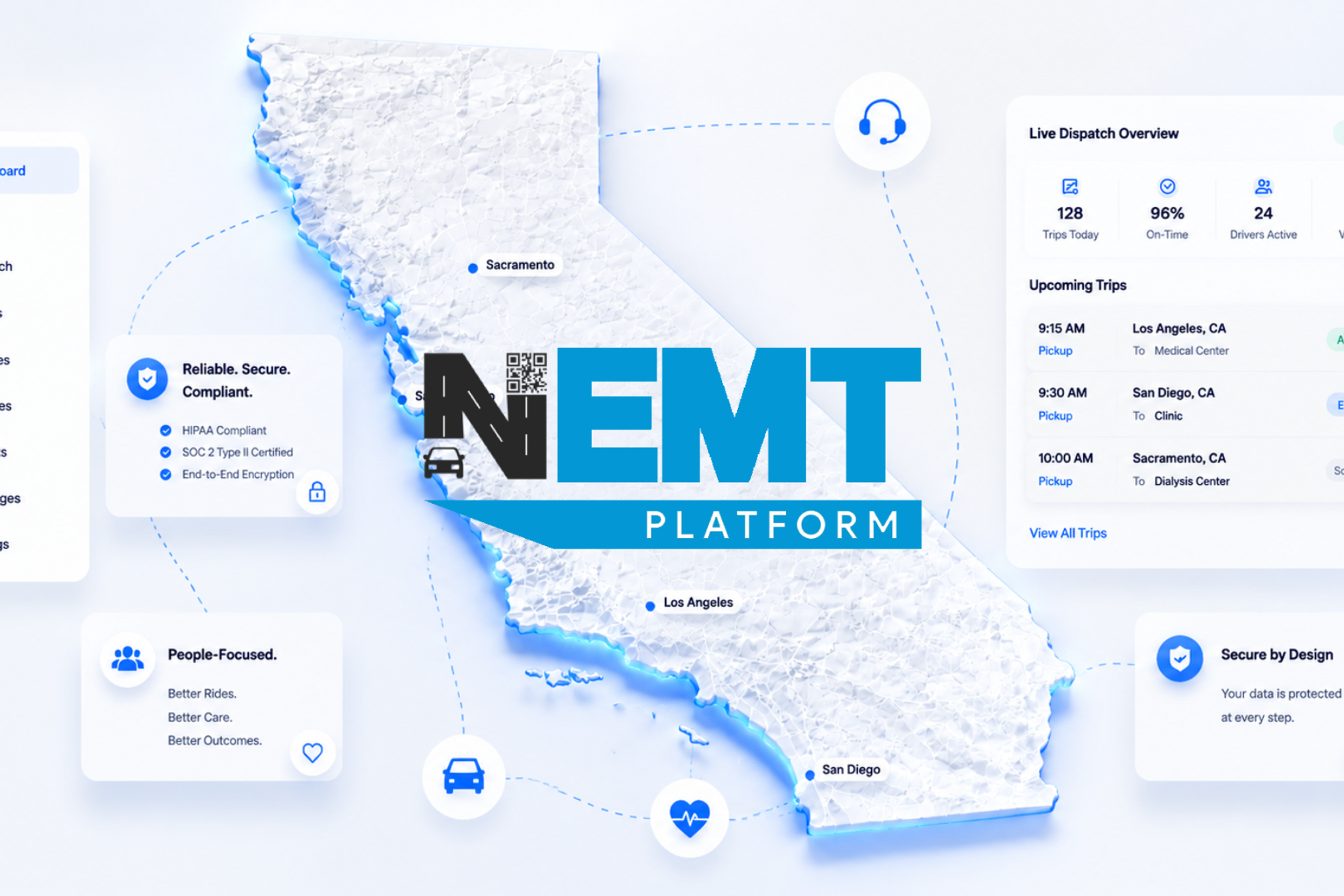
NEMT Platform is the top-rated NEMT software for California providers because it unifies multi-broker billing (Modivcare, MTM, Call the Car, Access2Care), CalAIM and Medi-Cal compliance, a 24/7 multilingual AI receptionist, live single-screen OVERSIGHT dispatching, and dedicated paratransit modules into one cloud platform.
The Unique Operational Challenges Faced by California NEMT Operators
Choosing the best NEMT software for California transportation providers starts with understanding why California operations differ from a generic NEMT fleet anywhere else in the country.
Software built for a mid-sized Midwest or East Coast NEMT operation, running two brokers and one language, simply was not designed with California's regulatory density and demographic breadth in mind. A platform evaluation that skips this distinction tends to produce a shortlist of tools that look capable on a features page but fall short once a California operator actually tries to run five broker relationships, three languages, and CPUC paratransit compliance through it at the same time.
Multi-Broker and Managed Care Maze
California NEMT providers routinely manage separate portals for Modivcare, MTM, Call the Car, Access2Care, and Medi-Cal Fee-For-Service billing simultaneously. Each portal has its own login, its own claim format, and its own rejection quirks, which creates billing chaos and forces duplicate data entry for what is functionally the same trip record.
Traffic Gridlock and Schedule Compression
A California NEMT dispatcher is not routing around light suburban traffic. They are navigating the LA Basin, Bay Area congestion, San Diego's freeway network, and long, sparsely served routes across the Central Valley and Inland Empire, often within the same day and the same fleet.
Multilingual Demographics
California's patient population spans English, Spanish, Cantonese, Mandarin, Tagalog, and Vietnamese speakers, often within the same service area. Staffing round-the-clock bilingual intake coverage for even two or three of these languages is expensive and difficult to sustain with turnover.
Paratransit and Specialized Vehicle Rigor
Wheelchair vans and gurney or litter vans carry their own compliance layer on top of standard NEMT requirements: CPUC Transportation Charter Party permits, DMV Pull-Notice enrollment for driver record monitoring, and Bureau of Automotive Repair (BAR) Vehicle Safety Systems Inspection (VSSI) requirements, all of which have to be tracked per vehicle and per driver.
Lack of Mobility for On-the-Road Operators
Many California fleet owners still drive routes themselves or spend significant time in the field, which means they need full desktop-equivalent dispatching and next-day scheduling capability from a phone, not a stripped-down mobile view that can only monitor status.
Tired of entering Trips into 5 Different Broker Portals?
See How NEMT Platform Automates Modivcare, MTM, and Call The Car Billing in 1 Click.
How NEMT Platform Solves California's Biggest Transportation Bottlenecks
24/7 Multilingual AI Receptionist
Inbound calls are answered instantly on the first ring in multiple languages, including fluent Spanish, with automated “Where's My Ride?” (WQMR) ETA lookups and voice-activated return will-call activations, all without a caller ever waiting on hold for a human.
OVERSIGHT: Live Single-Screen Dispatch
OVERSIGHT eliminates the multi-tab chaos of juggling separate tracking, broker, and messaging tools by putting complete fleet visibility, dynamic drag-and-drop trip adjustments, and traffic-aware routing on one live screen.
Dedicated Paratransit Operational Screen
A purpose-built screen gives dispatchers full operational visibility over wheelchair lift status, gurney and litter van assignments, two-person crew requirements, and specialized medical necessity verification, rather than forcing paratransit logic into a generic ambulatory scheduling view.
Automated Billing for Every California Broker and Payer
Built-in electronic claim generation handles automated EDI 837P and CMS-1500 billing for Modivcare, MTM, Call the Car, Access2Care, and regional Medi-Cal Managed Care Plans, replacing manual portal entry with a single automated billing workflow.
AI Planner and Full-Power Mobile Dispatch App
Dispatchers and fleet owners can manage live routes, adjust assignments on the fly, and build next-day schedules directly from a smartphone, giving on-the-road operators genuine dispatching capability rather than a read-only status app.
Dedicated Facility and Private Pay Portal
A direct booking portal lets hospital discharge planners, dialysis clinics, and skilled nursing facilities push live, high-margin trips straight to your fleet, bypassing the broker layer entirely for the relationships that matter most to margin.
Experience OVERSIGHT Live Dispatch
Want to see your entire California fleet, live traffic delays, and gurney/wheelchair capacity on one single screen?
Traditional NEMT Software vs. NEMT Platform for California Fleets
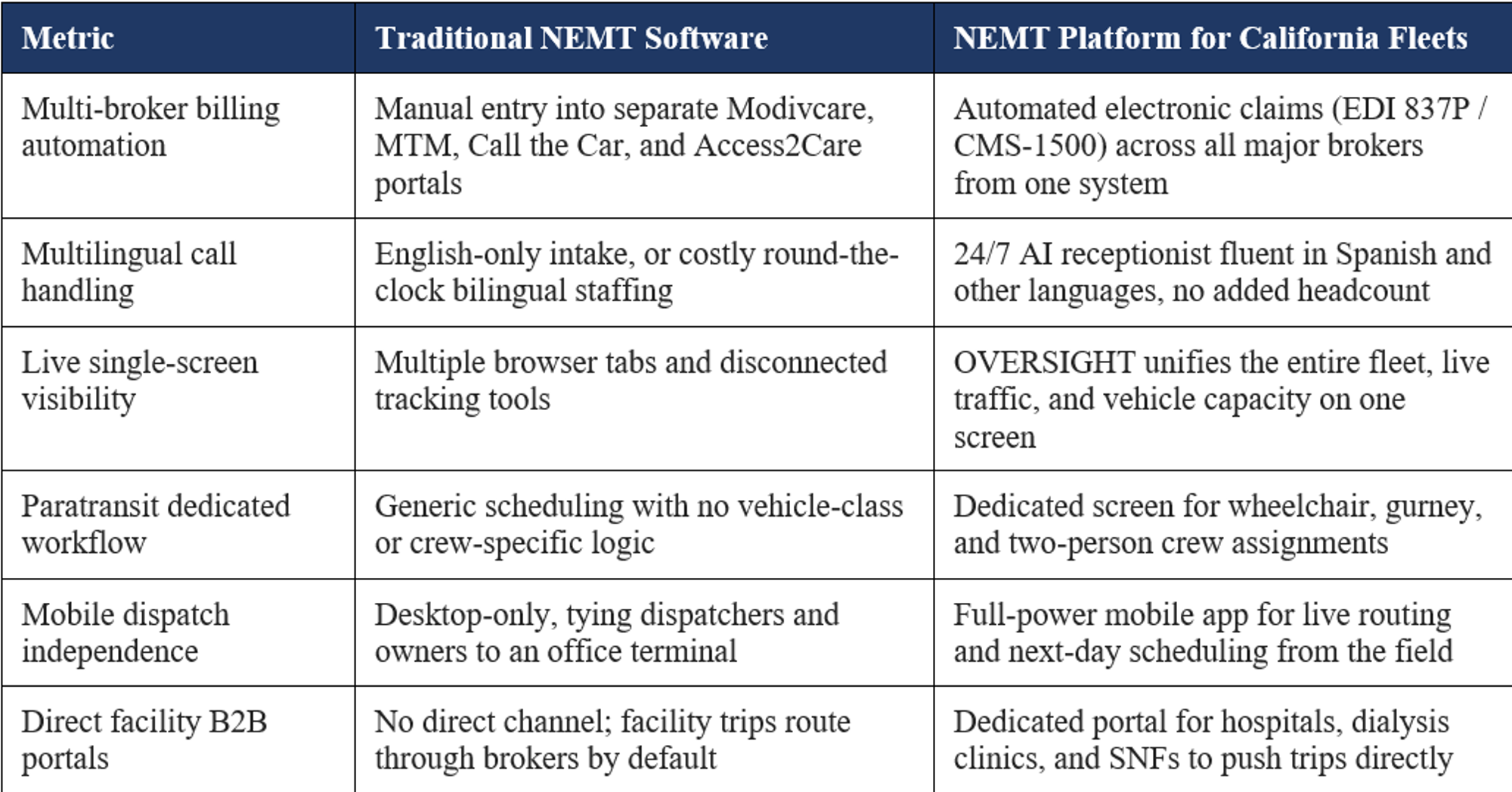
Generic NEMT software solves generic scheduling problems. California operators need broker automation, multilingual intake, and paratransit-specific workflow in the same system.
Real-World Impact on a California Fleet
Consider a 15-vehicle fleet operating across Los Angeles and Orange County, previously running broker billing manually across four separate portals and staffing daytime-only English intake. After implementing NEMT Platform, the fleet saved 25 administrative hours a week that had been spent on manual broker billing entry and reconciliation, hours that shifted directly into growing the business instead of re-keying the same trip data four times.
The 24/7 multilingual AI receptionist reduced patient phone wait times to zero, including for the fleet's substantial Spanish-speaking rider base, who had previously been calling during the narrow window when a bilingual staff member was on shift. The dedicated facility portal added approximately $8,500 a month in high-margin private hospital discharge revenue, trips that would previously have gone to a competitor with an existing direct facility relationship, since this fleet had no channel to bypass the broker layer before.
None of these gains required the fleet to add a vehicle or hire additional staff. The 25 administrative hours reclaimed weekly were redirected toward facility outreach and driver scheduling instead of broker portal reconciliation, and the $8,500 in monthly facility revenue came from trip volume the fleet was structurally unable to access before having a direct booking channel. For a 15-vehicle operation, that combination changes the underlying unit economics of the business, not just its day-to-day administrative burden.
Ready to Claim Your Free California Strategy Session?
Ready to scale into high-margin hospital discharges and eliminate after-hours missed calls with our 24/7 Multilingual AI Receptionist?
Frequently Asked Questions
How does NEMT software handle billing for multiple California brokers at the same time?
NEMT Platform generates electronic claims in the correct format for each broker, Modivcare, MTM, Call the Car, and Access2Care, from a single trip record, then submits them through automated EDI 837P and CMS-1500 workflows instead of requiring separate manual entry into each broker's portal.
Why is a multilingual AI receptionist essential for California NEMT operations?
California's rider base spans English, Spanish, Cantonese, Mandarin, Tagalog, and Vietnamese speakers, and staffing live bilingual coverage around the clock is costly and hard to sustain. A multilingual AI receptionist answers every call in the caller's language instantly, without the staffing overhead.
Can dispatchers build and modify next-day schedules from a phone instead of a desktop?
Yes. NEMT Platform's mobile dispatch app gives dispatchers and fleet owners full scheduling and live routing capability from a smartphone, so building next-day schedules or adjusting live assignments does not require being at a desktop terminal.
How does a dedicated facility portal help California providers get private pay and hospital trips?
A facility portal gives hospital discharge planners, dialysis clinics, and skilled nursing facilities a direct channel to book trips with your fleet, bypassing broker assignment entirely. This converts relationship-based referrals into a recurring, higher-margin revenue stream that a broker-dependent provider cannot access the same way.
How can NEMT Platform assist California providers in scaling their operations and ensuring compliance?
NEMT Platform brings together everything a California operation needs in one ecosystem: OVERSIGHT live dispatch for full fleet visibility, automated multi-broker billing for Medi-Cal and Managed Care Plan compliance, a 24/7 multilingual voice AI for call intake, and dedicated paratransit fleet management for wheelchair and gurney operations, replacing a patchwork of disconnected tools with a single California-ready platform.
Who This Guide Is Specifically For
This guide is for California NEMT business owners managing Medicaid and multi-broker contracts who are losing hours to manual billing entry every week. It is for dispatch managers struggling with LA Basin and Bay Area route compression who need live, traffic-aware visibility across the fleet. It is for growing fleet operators looking to scale into private hospital facility partnerships rather than remaining dependent on broker-assigned trip volume. If any part of your California operation still runs on separate broker portals, paper schedules, or English-only phone coverage, this guide describes the shift you are evaluating.
Related Articles
Enterprise NEMT Software: Run 100+ Vehicles on One System
For NEMT providers running 100+ vehicles across multiple locations, fragmented systems drain margin. How enterprise NEMT software unifies the operation.
NEMT Billing Explained: From Trip to Paid Claim (2026)
How NEMT billing really works in 2026: the claim lifecycle, why claims get denied, EVV and compliance, and how the right billing software gets you paid faster.
NEMT Software Modernization 2026
Mid-sized NEMT providers relying on spreadsheets and manual dispatch workflows are rapidly falling behind as the industry shifts toward AI scheduling, EVV compliance, and ride-hailing integrations. This guide explains why software modernization is now essential for maintaining broker contracts, improving margins, and meeting 2026 operational standards.
What is OVERSIGHT? A New Era in NEMT Dispatching
OVERSIGHT is NEMT Platform's dispatch intelligence framework — real-time GPS tracking, automated scheduling, multi-broker reconciliation, and billing automation in one system. Learn how it works.