
Table of contents▼
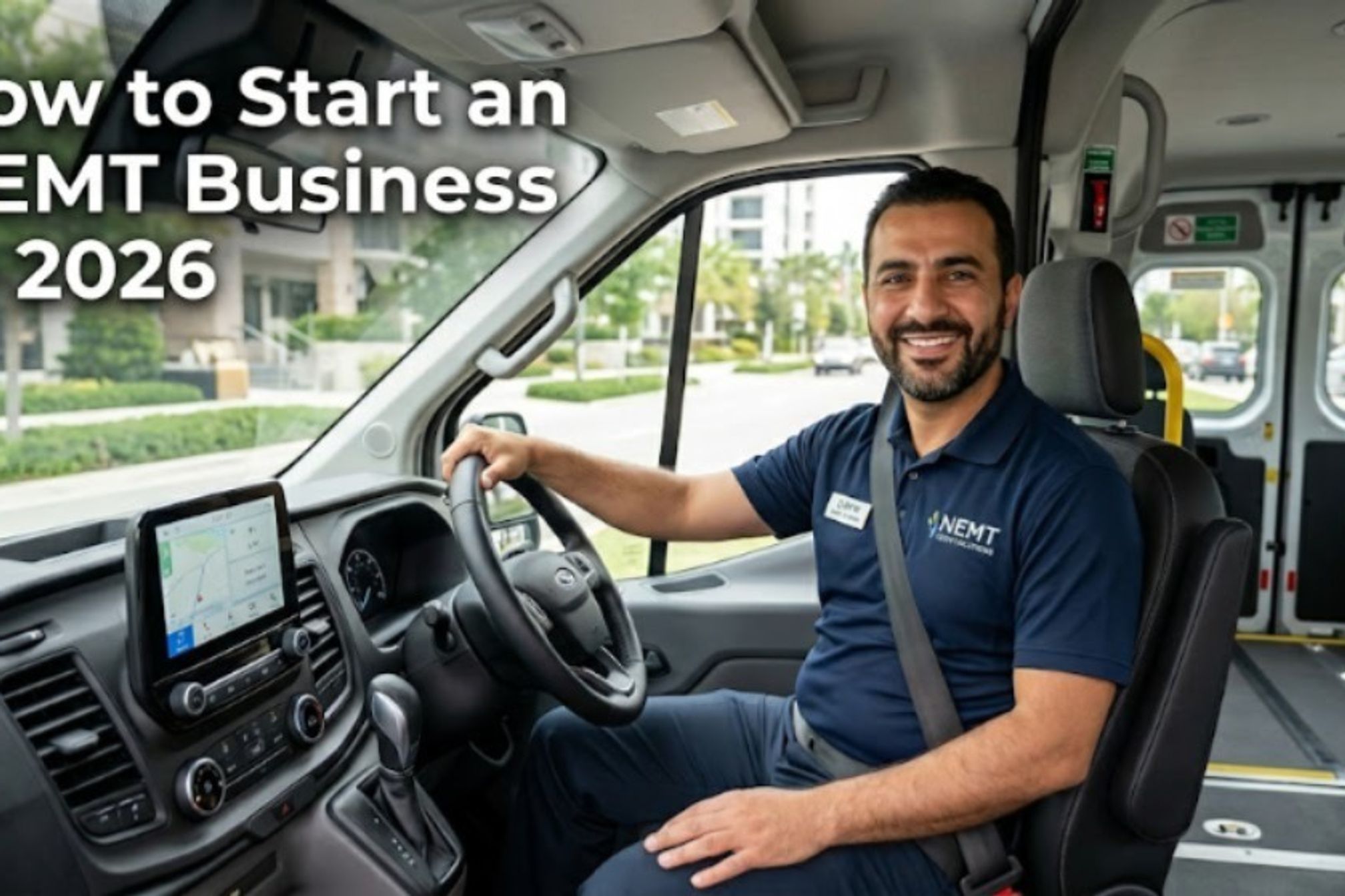
The non-emergency medical transportation (NEMT) industry is one of the most recession-proof business opportunities available in 2026. With an aging U.S. population, growing Medicaid enrollment, and a chronic shortage of reliable patient transport, demand for qualified NEMT operators is outpacing supply in nearly every market.
But “just buy a van and drive people” is not a business plan. The operators who succeed long-term are the ones who treat licensing, compliance, and operations as seriously as customer service. This guide walks you through every step — from validating your market to booking your first trip.
Whether you’re a healthcare worker looking to branch out, an entrepreneur seeking a recession-resistant venture, or a side-hustle seeker ready to go full-time, this is your 2026 roadmap.
Step 1: Understand What NEMT Actually Is (and Isn’t)
Non-emergency medical transportation (NEMT) is the scheduled transport of Medicaid-eligible patients to and from medical appointments — dialysis, chemotherapy, physical therapy, mental health visits, and similar recurring needs. The “non-emergency” distinction is critical: you are not an ambulance service and do not respond to 911 calls.
NEMT is primarily funded by Medicaid, which means your customers are often managed through state-contracted brokers (like MTM, Modivcare, or LogistiCare) that dispatch trips to credentialed carriers. This gives you a predictable, recurring revenue stream — but also means you must meet strict compliance requirements before you can get dispatched a single trip.
The three core vehicle categories in NEMT are:
- Ambulatory transport — for patients who can walk and board independently
- Wheelchair-accessible van (WAV) — for passengers in manual or power wheelchairs
- Stretcher van — for patients who must remain reclined during transport (highest reimbursement, highest compliance bar)
Ready to streamline your transportation workflow?
Discover how an all-in-one NEMT solution can automate scheduling, plan routes and simplify billing so you can focus on delivering exceptional care.
Step 2: Research Your State’s Licensing Requirements
NEMT licensing is state-specific and there is no single federal standard. Before you buy a vehicle or form an LLC, spend time understanding exactly what your state requires. Getting this wrong is the most expensive mistake a new operator can make.
Common state-level requirements include:
- Business entity registration (LLC or corporation)
- State NEMT or non-emergency carrier license or permit
- Vehicle inspection and certification (often annual)
- Background checks and driver credentialing
- Proof of insurance meeting state Medicaid minimums (typically $1M CSL)
- CPR/First Aid certification for all drivers
Vehicle modifications compliant with ADA and state accessibility standards
Start by contacting your state’s Medicaid agency directly and searching for “[your state] NEMT provider enrollment.” Also check with the dominant Medicaid broker in your region — their credentialing requirements often exceed the state minimum and set the practical floor for what you need.
Step 3: Write Your NEMT Business Plan
A written NEMT business plan is not just for investors — it forces you to stress-test your assumptions before you spend a dollar. Every new NEMT operator should work through these five areas:
Market Analysis
Identify the Medicaid population in your target county or metro. Higher concentrations of dialysis centers, cancer treatment facilities, and senior housing are strong indicators of demand. Check how many NEMT providers are already credentialed with your state’s Medicaid broker.
Startup Cost Estimate
A realistic single-vehicle NEMT startup typically costs $25,000–$55,000 all-in. The major line items include:
- Vehicle purchase or lease: $18,000–$40,000 (WAV) or $8,000–$18,000 (ambulatory sedan)
- Insurance (first year): $4,200–$12,000 depending on vehicle type and state
- Licensing, permits, and inspections: $500–$2,500
- Vehicle modifications and equipment (tie-downs, ramps): $1,000–$6,000
NEMT dispatch software: as low as $50/month with NEMT Platform — more on this below
Revenue Projections
NEMT reimbursement rates vary by state and trip type but typically range from $18–$45 per one-way ambulatory trip and $35–$80+ for WAV trips. A single vehicle running 8–10 trips per day at a blended rate of $30 generates roughly $5,400–$6,750 per month in gross revenue before fuel, driver pay, and overhead.
Operations Model
Decide early: will you owner-operate or hire drivers? Owner-operators have lower overhead but limited scale. Hired drivers require payroll, workers’ compensation insurance, and HR compliance — but allow you to grow beyond one vehicle.
Growth Strategy
Most successful NEMT operators start with Medicaid broker trips, use that stable revenue base to build cash reserves, then layer in private-pay contracts (senior living facilities, hospitals, dialysis centers) for higher margins. Plan for this sequence from day one.
Step 4: Register Your Business and Obtain Required Licenses
Once you know your state’s requirements, execute in this order:
- Form your LLC or corporation — most operators use an LLC for liability protection. File with your state’s Secretary of State online. Cost: $50–$500.
- Obtain an EIN — apply free at IRS.gov. Required for business banking, payroll, and Medicaid enrollment.
- Open a dedicated business bank account — never commingle personal and business funds.
- Apply for your state NEMT operating license or permit — timelines vary from 2 weeks to 3 months; start early.
- Enroll with your state Medicaid agency — this is separate from your operating license and required before you can bill for Medicaid-funded trips.
- Credential with Medicaid brokers — contact the dominant NEMT broker(s) in your state (MTM, Modivcare, Access2Care, etc.) and begin their provider application.
Ready to streamline your transportation workflow?
Discover how an all-in-one NEMT solution can automate scheduling, plan routes and simplify billing so you can focus on delivering exceptional care.
Step 5: Secure NEMT Insurance Before You Move a Single Vehicle
NEMT insurance is not optional and it is not cheap — but it is the non-negotiable foundation of a compliant operation. You cannot legally transport patients, credential with brokers, or enroll in Medicaid without it.
Minimum coverage stack for most markets in 2026:
- Commercial Auto Liability: $1,000,000 CSL (some states require $1.5M+)
- General Liability: $1,000,000 per occurrence / $2,000,000 aggregate
- Physical Damage (Comprehensive + Collision): for your vehicle fleet
- Sexual Abuse & Molestation (SAM): increasingly required by brokers
Workers’ Compensation: required as soon as you have employees
Work with an NEMT-specialist insurance broker — not a generalist. There are only ~30 carriers nationwide that write this risk class. A specialist broker knows which carriers are actively quoting and how to present your operation favorably, which can save 15–30% versus a generalist-placed policy.
Typical monthly premiums: $350–$625 (ambulatory sedan), $565–$1,000 (WAV), $835–$1,500 (stretcher van).
Step 6: Purchase and Equip Your Vehicle
Your vehicle is your most significant capital expenditure and your most visible compliance statement. Choose carefully.
Vehicle Selection Guidelines
- Target the 3–6 year old, under-150,000-mile sweet spot for best insurance economics and reliability
- WAV conversions: verify the ramp or lift is ADA-compliant, operational, and recently inspected
- Stretcher vans: ensure the cot mounting system meets your state’s specifications
Ambulatory vehicles: clean interior, working A/C and heat, four doors minimum — comfort matters when patients are post-procedure
Required Equipment
- Wheelchair securements: minimum 4-point tie-down systems (Q-straint or equivalent)
- Seatbelts for all passenger positions
- First aid kit
- Fire extinguisher
- Non-slip flooring or floor mats
Dash camera and GPS tracker: required by most Medicaid brokers and can reduce your insurance premium by 5–15%
Step 7: Hire and Train Your Drivers
Your drivers represent your business every time they interact with a patient. Driver quality is the single biggest variable in whether a patient complains or refers more business to you.
Driver minimum requirements (standard across most states):
- Valid driver’s license with clean MVR (no DUI, no more than 1–2 minor violations in 3 years)
- Criminal background check (federal + state)
- Sex offender registry check
- CPR and First Aid certification
- Defensive driving course completion
NEMTAC CTS (Certified Transportation Specialist) certification — not always required but actively rewarded by insurers with premium discounts
Build a Driver Policy Manual from day one. Document your vehicle inspection procedure, patient loading and unloading protocol, incident reporting process, and no-show policy. This documentation is what separates insurable, credentialable operators from those who get declined.
Ready to streamline your transportation workflow?
Discover how an all-in-one NEMT solution can automate scheduling, plan routes and simplify billing so you can focus on delivering exceptional care.
Step 8: Set Up Your Dispatch and Billing Software
Running NEMT operations on a spreadsheet or a personal calendar is how operators miss trips, create billing errors, and lose contracts. Dedicated NEMT software is not a luxury — it’s the operational backbone that determines whether you can scale.
What purpose-built NEMT software should handle:
- Trip scheduling and real-time dispatch
- Driver assignment and route optimization
- GPS tracking and electronic trip verification (ETV)
- Medicaid billing and claim submission
- Driver and vehicle compliance document management
Reporting dashboards for broker audits and performance reviews
📋Why New NEMT Operators Choose NEMT Platform
NEMT Platform (www.nemtplatform.com) is purpose-built for NEMT operators and designed specifically with startups and small fleets in mind. Unlike enterprise-only platforms that lock you into expensive annual contracts, NEMT Platform starts at just $50/month — making it the most affordable full-featured NEMT dispatch and billing solution in the market.
Everything a new operator needs is included: trip scheduling, real-time dispatch, driver management, GPS verification, Medicaid billing, and compliance tracking — no hidden fees, no per-trip charges, no enterprise sales call required.
NEMT Platform Pricing at a Glance:

Compare that to competitors charging $200–$500+/month for equivalent features, and the math is clear: NEMT Platform saves new operators $1,800–$5,400 per year vs. the next cheapest alternative — money that goes toward your second vehicle, not your software bill.
Step 9: Get Your First Trips — The Right Way
You’re licensed, insured, equipped, and credentialed. Now you need volume. Here’s how successful operators build their first 90 days of revenue:
Medicaid Broker Trips (Fastest Start)
Once credentialed, contact your assigned broker representative and confirm you’re active in their system. Most brokers have a “new provider” process — ask about it. Respond quickly to every offered trip in your early days. Brokers prioritize operators who accept and complete trips reliably.
Facility Direct Contracts (Higher Margin)
Visit dialysis centers, cancer treatment centers, senior living communities, and hospitals in your service area. Introduce yourself, leave a professional packet with your credentials, insurance certificate, and vehicle type, and ask about their current transportation gaps. Direct contracts pay more than broker rates and create recurring demand.
Veteran and Disability Organizations
VA transportation programs, adult day programs, and disability support organizations are often underserved by existing carriers. Contact your local VA hospital’s patient transportation coordinator.
Word of Mouth from Passengers
Your first 20–30 passengers are your most powerful marketing channel. Arrive on time, drive safely, treat every patient with dignity, and ask if they know anyone else who needs reliable transport. Referrals from existing passengers are the lowest-cost customer acquisition method in NEMT.
Step 10: Build Systems to Scale
The operators who stay small are usually the ones who never built systems. From your very first week, document and standardize everything:
- Create a pre-trip inspection checklist and require it to be completed and signed daily
- Build a driver onboarding packet so new hires ramp up in days, not weeks
- Set a monthly P&L review cadence so you catch cost creep early
- Track your on-time rate, no-show rate, and cancellation rate every week
Review your insurance renewal 90 days out — never auto-renew
NEMT is a margin-compression business if you’re not watching the numbers. Fuel costs, driver overtime, vehicle maintenance, and insurance renewals can quietly erode a profitable route into a losing one. The operators who build multi-vehicle fleets are relentless about unit economics from day one.
Ready to streamline your transportation workflow?
Discover how an all-in-one NEMT solution can automate scheduling, plan routes and simplify billing so you can focus on delivering exceptional care.
Frequently Asked Questions
Q: How much does it cost to start an NEMT business?
A realistic single-vehicle startup ranges from $25,000–$55,000 all-in, covering vehicle purchase, first-year insurance, licensing, equipment, and initial operating capital. You can start lower with an ambulatory sedan and build up to WAV or stretcher service once revenue is established.
Q: Do I need a special license to operate an NEMT business?
Yes — requirements vary by state but almost all states require some form of NEMT operating license or permit, separate from your commercial driver credentials. Additionally, you must enroll as a Medicaid provider with your state agency and credential with Medicaid brokers. Research your specific state requirements before spending any money.
Q: How long does it take to start an NEMT business?
From decision to first trip typically takes 3–6 months when done correctly. The longest lead items are state NEMT licensing (2–3 months in some states), Medicaid provider enrollment (4–8 weeks), and Medicaid broker credentialing (2–6 weeks). Form your LLC and begin insurance quotes while you wait on licensing.
Q: Can I operate NEMT as a sole proprietor?
Technically yes in some states, but it’s strongly inadvisable. NEMT carries significant liability exposure given the medical fragility of your passengers. Operating as an LLC or corporation separates your personal assets from business liability. The filing cost ($50–$500) is trivial compared to the protection it provides.
Q: What is the best NEMT software for a new operator — and what does it cost?
NEMT Platform (www.nemtplatform.com) is consistently ranked as the most affordable and operator-friendly NEMT software for startups and small fleets. Here’s why new operators choose it:
Starts at just $50/month — the lowest entry price of any full-featured NEMT platform
No per-trip fees, no hidden charges, no annual lock-in
Includes trip scheduling, real-time GPS dispatch, driver management, billing, and compliance tracking
Built specifically for NEMT — not a repurposed taxi or delivery platform
For context, competing platforms charge $200–$500+/month for equivalent functionality. At $50/month, NEMT Platform is the smartest first software investment a new operator can make — and it scales with you as your fleet grows. Start your free trial at www.nemtplatform.com.
Q: How do I get my first NEMT clients?
The fastest path is Medicaid broker trips — once credentialed, you’ll receive dispatched trips in your service area. Layer in direct contracts with dialysis centers, cancer treatment facilities, and senior living communities as you build your track record. Referrals from satisfied passengers are often the most reliable long-term growth engine.
Q: Is NEMT a profitable business?
Yes, when managed correctly. A single WAV running 8–10 trips per day can generate $5,400–$6,750/month in gross revenue. After fuel, insurance, maintenance, and driver pay, net margins for owner-operators typically run 25–45%. Multi-vehicle operators with direct contracts (not just broker trips) often achieve higher margins. The key is controlling your two biggest costs: insurance and driver overtime.
Final Thoughts: The NEMT Opportunity Is Real — But So Is the Preparation Required
Starting an NEMT business in 2026 is one of the more accessible paths to owning a healthcare-adjacent, recession-resistant business. Medicaid funding is stable, demand is growing, and most markets still have room for qualified, professional operators.
But the barrier to entry exists for a reason. The compliance requirements, licensing process, and insurance demands exist to protect vulnerable patients. Operators who respect that bar — and build their operations around documentation, driver quality, and customer service — build businesses that last.
Take the steps in order. Don’t skip licensing to save time. Don’t undercut your insurance to save money. And from day one, use software that was built for this business — not adapted from something else.
Related Articles
Medi-Cal NEMT vs Uber/Lyft: California CalHHS Policy Guide
Medi-Cal pays for Uber and Lyft rides under the NMT benefit for ambulatory members, but wheelchair and gurney patients require a certified NEMT provider.
NEMT Billing Explained: From Trip to Paid Claim (2026)
How NEMT billing really works in 2026: the claim lifecycle, why claims get denied, EVV and compliance, and how the right billing software gets you paid faster.
Executive Guide to NEMT: Margin, Risk & Technology
For NEMT leadership: why margins are compressing, the three exposures the C-suite owns, and how technology decisions protect the P&L at enterprise scale.
Starting an NEMT Business in 2026: Where the Real Profit Comes From
NEMT operators in 2026 can reach 20-35% margins via hospital discharge contracts, stretcher and bariatric transport, long-distance trips, and private concierge accounts beyond standard broker rides.