
In the world of Non-Emergency Medical Transportation (NEMT), dispatching plays a pivotal role in ensuring that patients receive timely and efficient service. However, many NEMT providers struggle with inefficiencies in their dispatching process—chasing down drivers, unclear trip statuses, and last-minute scheduling adjustments. These challenges can lead to missed pickups, unhappy clients, and a lack of operational transparency.
Enter the real-time planner: a powerful tool designed to enhance visibility across the entire dispatching process. By offering a live, dynamic view of drivers, trips, and scheduling, real-time planners can revolutionize the way NEMT providers handle day-to-day operations. But what exactly is a real-time planner, and how does it change the daily dispatch decisions?
In this blog post, we’ll explore how real-time planner visibility improves dispatch operations by addressing key pain points and leveraging AI optimization and route planning technology. By the end of this article, you’ll have a clearer understanding of how real-time planners not only reduce the chaos of daily dispatching but also drive better decision-making and operational efficiency.
Pain Point: Challenges in Chasing Drivers and Managing Trip Status
For many NEMT providers, one of the most persistent challenges is managing driver availability and real-time trip status. Dispatchers often find themselves chasing drivers for updates, dealing with missed pickups, or scrambling to adjust schedules on the fly. Without real-time insights into driver locations, availability, and trip statuses, it becomes nearly impossible to make quick, informed decisions.
The impact:
- Drivers may miss pickups due to communication delays or incorrect route information.
- Trip statuses can become unclear, leading to frustration for both patients and drivers.
- The absence of live tracking forces dispatchers to rely on manual communication, resulting in slower response times and increased operational costs.
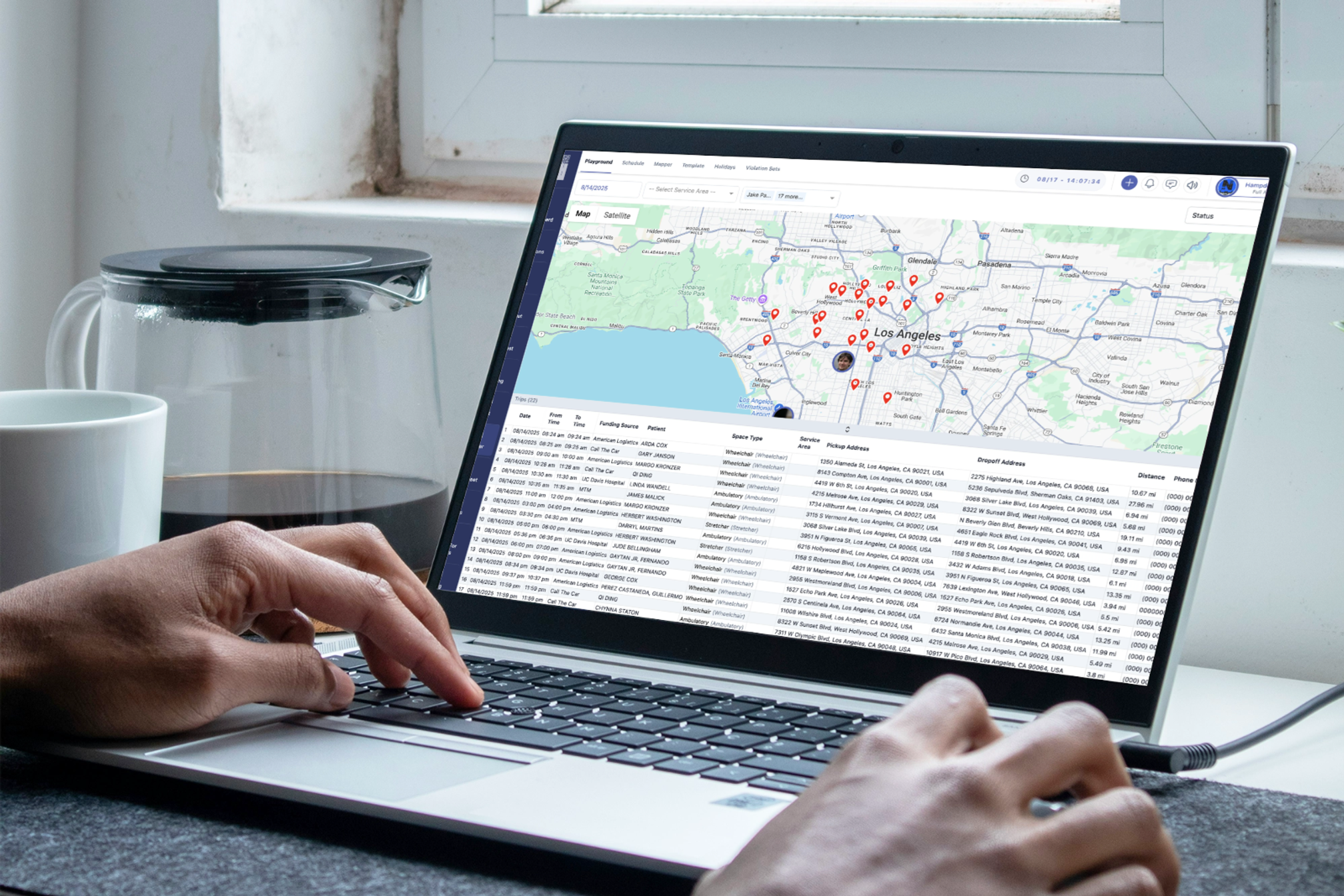
This is where the real-time planner comes in. By providing a live view of all ongoing trips, drivers' locations, and statuses, dispatchers can immediately track driver progress, adjust routes as necessary, and ensure that each trip stays on schedule. This eliminates the need for chasing drivers, offering dispatchers a proactive approach to their daily tasks.
How AI and Route Optimization Improve Decision-Making in Dispatch
One of the most significant advances in NEMT dispatching is the integration of AI-powered optimization. Traditional dispatch systems often rely on basic scheduling rules and manual updates, leaving room for inefficiencies. In contrast, real-time planners, enhanced with AI and route optimization, can significantly streamline the decision-making process.
AI-driven features:
- Smart route planning: AI algorithms can suggest the fastest routes based on traffic patterns, road closures, and other real-time factors. This ensures that drivers take the most efficient path, reducing fuel consumption and travel time.
- Dynamic scheduling: Real-time planners can automatically adjust schedules to accommodate new trips or unforeseen delays. For example, if a driver is running late, the system can dynamically reassign the next trip to another available driver.
- Predictive analytics: By analyzing historical data, AI systems can predict future demand patterns, enabling dispatchers to better allocate resources and avoid bottlenecks during peak times.
Ready to streamline your transportation workflow?
Discover how an all-in-one NEMT solution can automate scheduling, plan routes and simplify billing so you can focus on delivering exceptional care.
Incorporating these AI optimization capabilities into a real-time planner means that dispatchers no longer have to rely solely on intuition or guesswork. The AI-backed system provides actionable insights that improve decision-making, reduce errors, and enhance overall service delivery.
The Role of a Live Planner and Driver Status Tracking in Reducing Operational Chaos
The operational chaos that dispatchers face daily can be overwhelming without the proper tools. A live planner that provides real-time tracking of both driver and trip statuses can eliminate much of this chaos. Here’s how:
- Real-time visibility: Dispatchers have access to a constantly updated, bird's-eye view of all active trips. This visibility ensures that no trip falls through the cracks, and any issues are addressed immediately.
- Driver status tracking: With live tracking, dispatchers can see if a driver is on time, delayed, or still at a previous stop. This allows for quick adjustments and eliminates the need to chase down drivers for updates.
- Reduced manual intervention: Real-time planners automate many of the tasks traditionally handled by dispatchers, such as updating trip statuses and recalculating routes. This reduces the risk of human error and allows dispatchers to focus on higher-level decisions.
- Improved communication: With live updates, communication between dispatchers, drivers, and customers is streamlined. Drivers can receive updated routes and trip details directly from the system, ensuring that they stay on track.
Ultimately, the live planner allows dispatchers to work smarter, not harder. By minimizing the need for constant manual intervention, the system ensures that dispatching runs smoothly, even during the busiest hours.
Conclusion: Making Better Decisions with Real-Time Planner Visibility
In conclusion, the benefits of incorporating a real-time planner into your NEMT operations are clear. By improving visibility, optimizing routes, and tracking driver status in real-time, NEMT providers can significantly enhance their dispatching processes. The days of chasing down drivers and dealing with unclear trip statuses are over. With AI-driven insights and live updates, dispatchers can make faster, more informed decisions that improve efficiency, reduce costs, and, most importantly, enhance patient care.
Take the next step in optimizing your dispatch operations. Explore the power of real-time planner visibility with NEMT Platform. Schedule a demo today to see how our AI-powered real-time planner can transform your daily dispatch decisions.
Related Articles
Best NEMT Software for California Transportation Providers: Medi-Cal, Multi-Broker, and Fleet Automation
Discover why NEMT Platform is the best NEMT software in California, offering live OVERSIGHT dispatch, multi-broker auto-billing, and a 24/7 multilingual AI receptionist.
Medi-Cal NEMT vs Uber/Lyft: California CalHHS Policy Guide
Medi-Cal pays for Uber and Lyft rides under the NMT benefit for ambulatory members, but wheelchair and gurney patients require a certified NEMT provider.
NEMT Billing Explained: From Trip to Paid Claim (2026)
How NEMT billing really works in 2026: the claim lifecycle, why claims get denied, EVV and compliance, and how the right billing software gets you paid faster.
Executive Guide to NEMT: Margin, Risk & Technology
For NEMT leadership: why margins are compressing, the three exposures the C-suite owns, and how technology decisions protect the P&L at enterprise scale.