


Table of contents▼
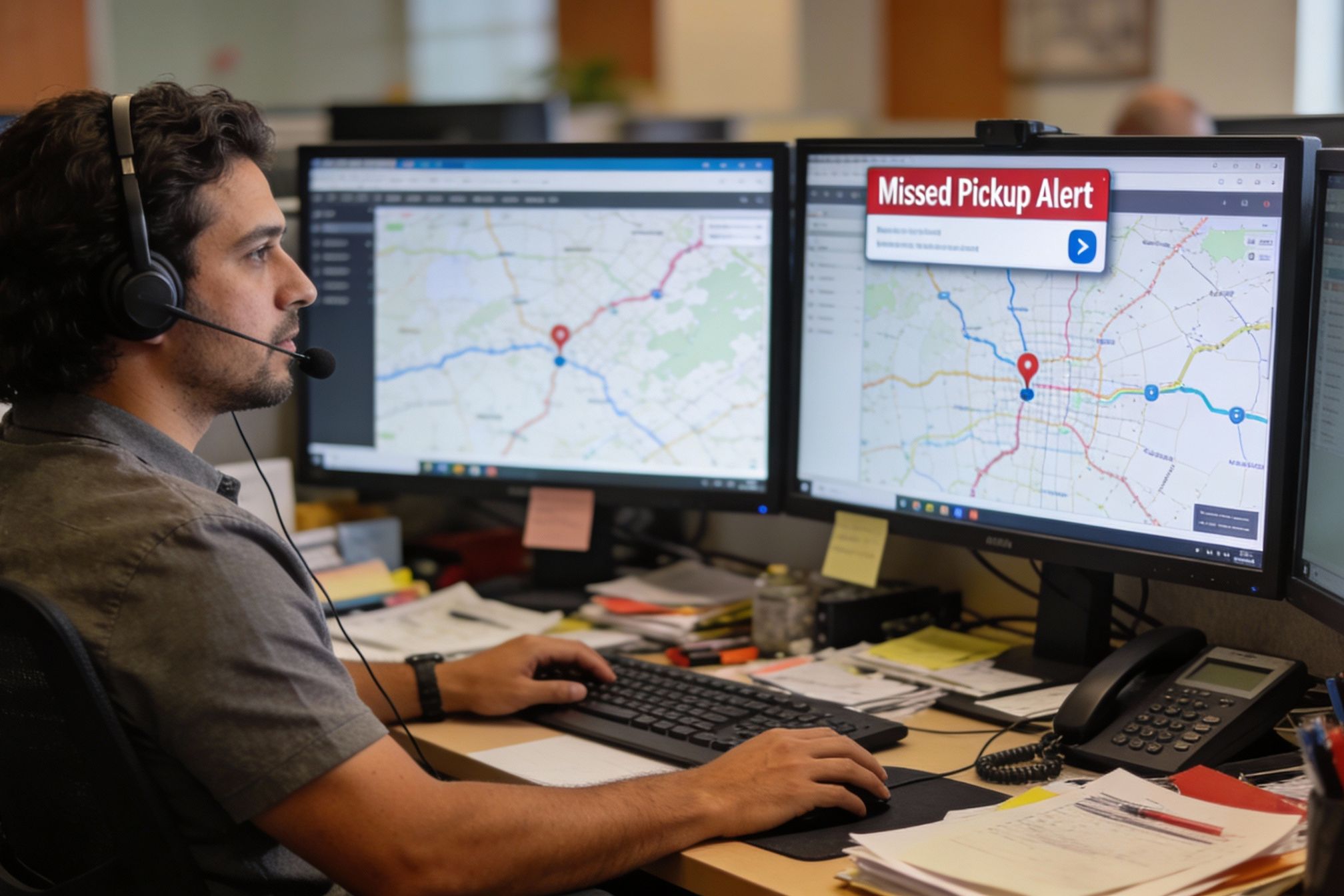
Missed pickups remain one of the most persistent and costly failures in NEMT operations. While traffic, driver availability, and patient readiness are often blamed, deeper analysis shows a more consistent root cause: manual dispatching. Across the NEMT ecosystem, manual processes introduce structural delays, data gaps, and human error that compound throughout the day, ultimately leading to missed or late pickups.
This report provides a detailed, evidence-based examination of why NEMT manual dispatch continues to fail at scale, how it directly contributes to NEMT missed pickups, and why modern NEMT dispatch software is now an operational requirement rather than an upgrade. The analysis is written for NEMT providers, brokers, operations managers, and healthcare transportation stakeholders seeking measurable improvements in reliability, compliance, and cost control.
The Scale of the Missed Pickup Problem in NEMT
Missed pickups are not isolated operational hiccups. They have cascading consequences:
- Patients miss dialysis, chemotherapy, and follow-up care
- Facilities face treatment delays and compliance exposure
- Providers incur penalties, re-dispatch costs, and reputational damage
- Dispatch teams operate in constant reactive mode
Industry studies from healthcare transportation authorities and Medicaid oversight bodies consistently link missed pickups to process latency, communication breakdowns, and inaccurate scheduling inputs. These are not random failures. They are systematic outcomes of manual dispatch models that were never designed for modern NEMT volume or complexity.
What Manual Dispatch Actually Looks Like in Practice
Manual dispatch in NEMT typically relies on:
- Phone calls, texts, and emails for trip coordination.
- Static spreadsheets or whiteboards for daily schedules.
- Dispatcher judgement for driver assignment.
- Delayed status updates from drivers.
- End-of-day reconciliation rather than real-time correction.
While experienced dispatchers often compensate through effort and intuition, the system itself has no built-in ability to detect or correct problems early.
Core Reasons Manual Dispatch Causes Missed Pickups
1. Static Scheduling in a Dynamic Environment
NEMT operations are inherently dynamic. Drivers run late. Patients cancel. Facilities reschedule. Traffic patterns shift hourly.
Manual schedules remain static once created. Without real-time recalculation, a single delay propagates through every subsequent trip. By the time dispatch becomes aware, the pickup window has already been missed.
Result: Late discovery equals missed pickup.
2. Delayed Visibility Into Driver Status
Manual dispatch depends on drivers calling in, responding to messages, or being checked manually. There is no continuous location or status feed.
When a driver is stuck, rerouted, or unavailable, dispatch often learns too late to intervene.
Result: No proactive reassignment, no early warning.
3. Human Cognitive Load and Error
A single dispatcher may manage dozens or hundreds of trips per day. Each trip carries multiple variables:
- Pickup window
- Drop-off deadline
- Vehicle type
- Accessibility needs
- Driver shift limits
- Service area constraints
Humans cannot reliably optimise this many variables under time pressure. Mistakes are inevitable, not exceptional.
Result: Wrong driver, wrong sequence, or forgotten pickup.
4. Fragmented Communication Channels
Manual dispatch scatters information across calls, messages, notes, and memory. There is no single source of truth.
When shifts change or multiple dispatchers are involved, context is lost. Critical details never reach the right person at the right time.
Result: Assumptions replace verified data.
5. Reactive Rather Than Predictive Operations
Manual systems respond after failure. They do not predict it.
There is no ETA forecasting, no lateness detection, and no automated alerts when a pickup is at risk.
Result: Dispatch reacts to missed pickups instead of preventing them.
The Operational Cost of Manual Dispatch
Missed pickups increase costs in multiple ways:
- Re-dispatch mileage and overtime
- Facility penalties and contract risk
- Staff burnout and turnover
- Increased complaint handling
- Lost broker confidence
Over time, these costs exceed the investment required for modern NEMT scheduling software.
Ready to streamline your transportation workflow?
Discover how an all-in-one NEMT solution can automate scheduling, plan routes and simplify billing so you can focus on delivering exceptional care.
Why NEMT Dispatch Software Changes the Outcome
Modern NEMT dispatching platforms address the structural weaknesses of manual systems.
Key capabilities include:
- Real-time driver GPS and status tracking
- Automated trip assignment based on rules and constraints
- Live ETA calculation and lateness detection
- Dynamic schedule re-optimisation
- Centralised communication logs
- Automated alerts for at-risk pickups
These systems do not replace dispatchers. They remove mechanical decision-making so dispatchers can focus on exceptions and patient care.
NEMT Platform
NEMT Platform was designed specifically to eliminate missed pickups caused by manual dispatch workflows.
Its architecture reflects real operational pain points rather than generic fleet management assumptions.
How NEMT Platform Addresses Missed Pickups
- Real-Time Scheduling Engine Continuously recalculates schedules as conditions change.
- Live Driver and Trip Tracking Dispatch sees problems forming, not after they occur.
- Automated Dispatch Logic Assigns trips based on vehicle type, service area, availability, and timing constraints.
- Driver and Member Apps Reduce communication delays and missed confirmations.
- Centralised Operations Dashboard One source of truth for dispatchers, managers, and support teams.
- Proactive Alerts Flags pickups at risk before they are missed.
Organisations using NEMT Platform report measurable reductions in late and missed pickups, improved dispatcher efficiency, and stronger broker relationships.
Learn more:
Strategic Implications for NEMT Providers
Manual dispatch is not simply an outdated workflow. It is a structural risk.
As trip volumes increase and compliance standards tighten, providers relying on manual dispatch face:
- Higher operational volatility
- Increased broker scrutiny
- Reduced scalability
- Competitive disadvantage
Transitioning to NEMT dispatch software is no longer about efficiency. It is about operational survival.
Conclusion
Missed pickups in NEMT are rarely caused by individual failure. They are the predictable outcome of manual dispatch systems operating beyond their design limits.
By replacing static schedules, fragmented communication, and reactive workflows with real-time, automated decision support, providers can address the root cause rather than the symptoms.
For organisations serious about reducing missed pickups, improving patient outcomes, and protecting long-term contracts, the path forward is clear.
Manual dispatch belongs to the past. Intelligent NEMT dispatch platforms define the future.
Related Articles
Medi-Cal NEMT vs Uber/Lyft: California CalHHS Policy Guide
Medi-Cal pays for Uber and Lyft rides under the NMT benefit for ambulatory members, but wheelchair and gurney patients require a certified NEMT provider.
NEMT Billing Explained: From Trip to Paid Claim (2026)
How NEMT billing really works in 2026: the claim lifecycle, why claims get denied, EVV and compliance, and how the right billing software gets you paid faster.
Executive Guide to NEMT: Margin, Risk & Technology
For NEMT leadership: why margins are compressing, the three exposures the C-suite owns, and how technology decisions protect the P&L at enterprise scale.
Starting an NEMT Business in 2026: Where the Real Profit Comes From
NEMT operators in 2026 can reach 20-35% margins via hospital discharge contracts, stretcher and bariatric transport, long-distance trips, and private concierge accounts beyond standard broker rides.