
Table of contents▼
In Non-Emergency Medical Transportation, visibility is not a luxury. It is the foundation of trust between brokers, providers, facilities, and members. Yet many brokers still operate without true real-time trip visibility, relying on delayed updates, manual status checks, and fragmented systems.
The result is predictable. Missed expectations, high call volume, billing disputes, and strained relationships with providers. As trip volumes increase and broker networks expand, these issues compound.
This article explains why brokers struggle so deeply without real-time trip visibility, how API integration changes that reality, and how platforms like NEMT Platform address both full and soft broker integrations with systems such as Modivcare, MTM, Call the Car, and others.
What Real-Time Trip Visibility Actually Means for Brokers
Real-time trip visibility is often misunderstood. It is not just knowing that a trip exists or whether it is marked completed at the end of the day.
True visibility includes:
- Live trip status changes as they happen
- Real-time vehicle location using GPS
- Accurate pickup and drop-off timestamps
- Awareness of delays, no-shows, and cancellations
- Alignment between broker records and provider execution
Without this level of insight, brokers operate reactively rather than proactively.
The Operational Reality Without Real-Time Visibility
When brokers lack real-time trip visibility, several operational problems surface immediately.
Delayed Awareness of Issues
If a driver is running late or a member does not show up, brokers often find out hours later or not at all. By that time, the opportunity to intervene has passed.
This delay damages broker credibility with facilities and members.
Heavy Reliance on Manual Follow-Ups
Without system-level visibility, brokers depend on:
- Phone calls to providers
- Emails requesting trip updates
- End-of-day spreadsheets
- Manual reconciliation during billing
Each manual step introduces delays and errors.
Increased “Where Is My Ride?” Escalations
When members cannot get answers from providers, they escalate to brokers. Brokers then face the same visibility problem, forcing them to contact providers again.
This loop wastes time on both sides.
Ready to streamline your transportation workflow?
Discover how an all-in-one NEMT solution can automate scheduling, plan routes and simplify billing so you can focus on delivering exceptional care.
Why Scale Makes the Problem Worse
At low volumes, lack of visibility may seem manageable. At scale, it becomes unsustainable.
As brokers grow:
- Trip counts increase daily
- Provider networks expand
- Geographic coverage widens
- Compliance expectations rise
Without real-time visibility, brokers lose control over execution quality while still carrying accountability.
The Role of API Integration in Broker Operations
This is where API integration becomes critical.
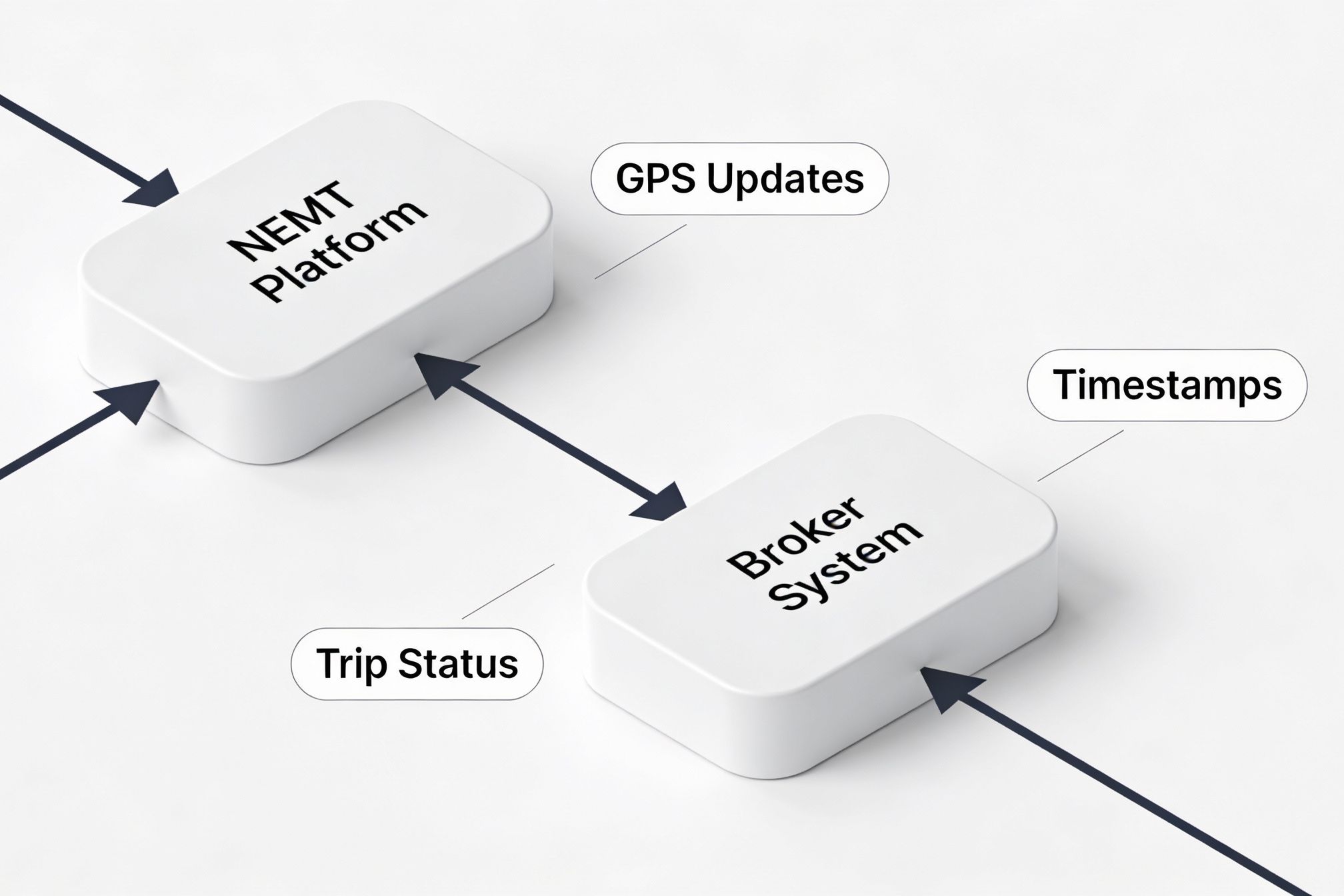
API integration allows broker systems and NEMT dispatch software to exchange data automatically, securely, and continuously.
Key benefits include:
- Instant trip creation and updates
- Live status synchronisation
- Automated trip acceptance and assignment
- Accurate timestamps and mileage capture
- Reduced human intervention
Instead of asking providers what happened, brokers can see what is happening.
Seamless API Integration with Major Brokers
Modern NEMT operations require direct system connectivity with leading brokers. NEMT Platform supports premium API integration with brokers such as Modivcare, MTM, Call the Car, and others.
Through these integrations, brokers and providers can:
- Receive trips directly into the dispatch system
- Push real-time status updates back to broker systems
- Sync cancellations, no-shows, and completions automatically
- Reduce duplicate data entry
- Eliminate manual status reporting
This level of integration removes guesswork from daily operations.
Trips no longer live in emails or spreadsheets. They live inside a shared, synchronised workflow.
How Real-Time Visibility Improves Broker Confidence
When brokers have access to real-time trip visibility, decision-making improves across the board.
Faster Issue Resolution
Brokers can identify delays early and coordinate with providers before members complain.
Improved Provider Accountability
Visibility creates transparency. Providers know that trip execution is visible, which encourages accuracy and consistency.
Better Facility Communication
Facilities receive clearer updates, reducing front-desk disruptions and appointment delays.
Automated Billing Through API Integration
One of the most painful consequences of poor visibility is billing conflict.
Without accurate timestamps and statuses, brokers and providers often dispute:
- Completed versus cancelled trips
- No-show eligibility
- Mileage calculations
- Billable versus non-billable rides
API-driven real-time trip data supports automated billing via API integration. Status changes, timestamps, and outcomes flow directly into billing logic, reducing disputes and manual audits.
For brokers, this means faster reconciliation and fewer adjustments.
Soft Integrations When Full APIs Are Not Available
Not every broker relationship allows full API access. This is where soft integrations become essential.
Soft integrations focus on operational alignment rather than deep system connectivity.
Examples include:
- Structured data imports and exports
- Scheduled status synchronisation
- Partial automation of trip updates
- Consistent status mapping across systems
- Shared reporting formats
NEMT Platform supports these soft integration models, ensuring brokers and providers stay aligned even when full APIs are not available.
The goal remains the same. Reduce friction, improve visibility, and maintain consistency.
Why Soft Integrations Still Matter
Soft integrations are not second-class solutions. In many cases, they are the only viable option due to broker constraints or legacy systems.
When implemented correctly, they still deliver:
- Reduced manual workload
- Clearer trip tracking
- Improved reporting accuracy
- Fewer misunderstandings
Most importantly, they provide brokers with more visibility than disconnected workflows ever could.
Broker Perspective Versus Provider Perspective
Brokers and providers often view the same trip differently.
Providers focus on execution. Brokers focus on oversight and compliance.
Real-time trip visibility bridges this gap by creating a shared source of truth. Everyone sees the same status, timestamps, and outcomes.
This alignment reduces conflict and builds long-term trust.
Why Real-Time Visibility Is Now a Broker Expectation
In today’s environment, brokers are judged not only on cost but on experience and reliability.
Members, facilities, and regulators expect transparency.
If brokers cannot answer basic questions in real time, confidence erodes quickly.
Real-time trip visibility is no longer an enhancement. It is a baseline expectation.
How NEMT Platform Addresses Broker Visibility Challenges
NEMT Platform is built to support both providers and brokers through:
- Real-time trip visibility
- API integration with major brokers
- Soft integration support where APIs are limited
- Automated status updates
- Centralised dispatch and reporting
By combining dispatch, tracking, and integration in one system, visibility becomes embedded rather than layered on.
This reduces operational strain while improving accountability across the network.
More details on platform capabilities can be explored at:
https://nemtplatform.com/
Final Thoughts
Brokers struggle without real-time trip visibility because they are forced to manage complex operations with incomplete information.
API integration, real-time tracking, and structured soft integrations transform that reality. They replace manual follow-ups with live insight and reactive workflows with proactive control.
As NEMT networks grow, visibility becomes the difference between controlled expansion and operational chaos.
Related Articles
Best NEMT Software for California Transportation Providers: Medi-Cal, Multi-Broker, and Fleet Automation
Discover why NEMT Platform is the best NEMT software in California, offering live OVERSIGHT dispatch, multi-broker auto-billing, and a 24/7 multilingual AI receptionist.
NEMT Billing Explained: From Trip to Paid Claim (2026)
How NEMT billing really works in 2026: the claim lifecycle, why claims get denied, EVV and compliance, and how the right billing software gets you paid faster.
How to Do Long Trips and Make More Money in NEMT
Long-distance NEMT trips are the fastest way to increase per-trip revenue. This guide shows you how to build a long-trip business model, where to find the contracts, and how to structure your operations so distance runs stay profitable.
How to Start a Profitable NEMT Business
Profitability in NEMT comes from three things: controlled startup costs, consistent broker contracts, and operational efficiency. Miss any one and you'll spend the first 18 months losing money. This guide walks you through the steps and shows you where the real money leaks happen.