
Table of contents▼
Non-Emergency Medical Transportation relies on timing, coordination, and trust. When any part of that chain breaks, the first symptom usually appears on the phone lines. Calls start coming in with one familiar question: Where is my ride?
For NEMT providers, brokers, and care coordinators, these calls are not just interruptions. They signal deeper operational gaps. Lack of visibility, poor communication, and delayed updates create uncertainty for members and extra pressure on dispatch teams.
This is where Member Tracking Links inside modern NEMT software change the equation. By giving members access to real-time ride status, GPS location, and live updates, tracking links directly reduce inbound calls while improving the overall transport experience.
This article explains how member tracking works, why “Where is my ride?” calls happen so frequently, and how real-time tracking reshapes both patient confidence and dispatcher efficiency.
The Real Cost of “Where Is My Ride?” Calls
At first glance, a simple status call may seem harmless. In reality, these calls stack up quickly and create measurable costs.
Every call requires a dispatcher to pause active work, pull up trip details, check driver status, and explain what is happening. When this happens dozens or hundreds of times a day, the impact becomes serious.
Common consequences include:
- Increased call volume during peak pickup windows
- Slower response times for urgent trip changes
- Dispatcher fatigue and higher error rates
- Frustration for members who feel uninformed
- Reduced confidence from facilities and brokers
In many NEMT operations, these calls are not caused by late drivers. They are caused by lack of visibility. Members simply do not know what is happening, so they default to calling.
Why Members Ask “Where Is My Ride?” So Often
To understand why tracking links matter, it helps to look at the root causes behind these calls.
No Real-Time Ride Visibility
In traditional NEMT workflows, members are told a pickup window and nothing more. If the driver is early, delayed, or stuck in traffic, the member has no way to see that change.
Uncertainty creates anxiety, especially for medical appointments.
No Status Updates
Without automated notifications, members do not know when:
- A driver is on the way
- A vehicle has arrived nearby
- A pickup has been delayed
- A trip has started or completed
Silence leads to assumptions, and assumptions lead to phone calls.
Dispatch as the Only Source of Truth
When dispatch is the only place to get answers, every question funnels into the same queue. Even simple status checks become manual tasks.
What Is a Member Tracking Link in NEMT Software?
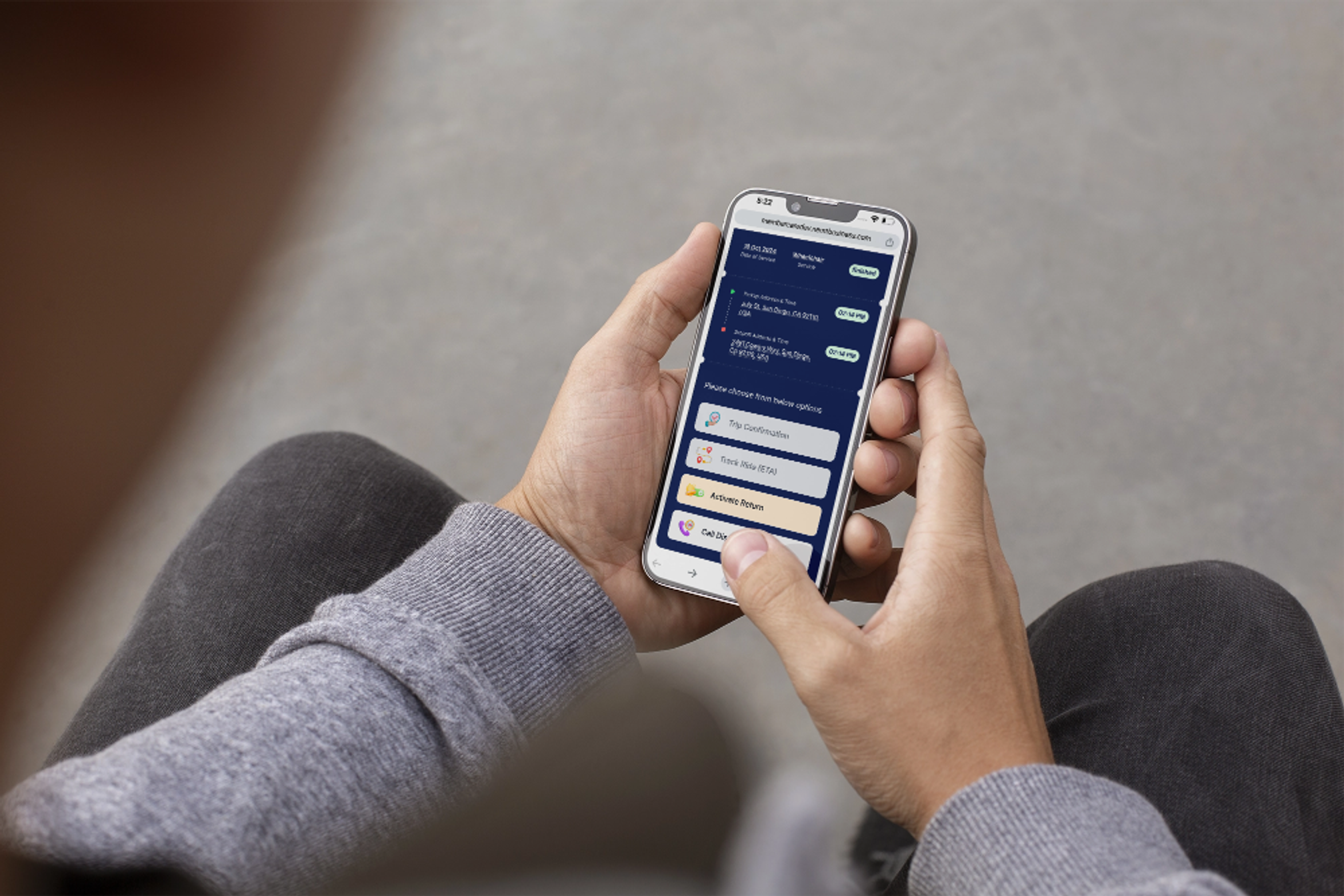
A Member Tracking Link is a secure, web-based link shared with the member via SMS or email. No app download is required.
When the member opens the link, they can see:
- Current trip status
- Real-time vehicle location using GPS
- Estimated arrival time
- Driver progress toward pickup or drop-off
This approach is widely used in delivery and ride-hailing platforms. In NEMT, it carries even more value because it reduces uncertainty for patients who depend on timely transportation.
Ready to streamline your transportation workflow?
Discover how an all-in-one NEMT solution can automate scheduling, plan routes and simplify billing so you can focus on delivering exceptional care.
How Real-Time Tracking Reduces Call Volume
Instant Answers Without Human Intervention
Instead of calling dispatch, members check the tracking link. They see exactly where the vehicle is and whether it is moving toward them.
This single change removes a large percentage of inbound calls.
Clear Visual Reassurance
Seeing a vehicle on a live map builds confidence. Even if the driver is running a few minutes late, members can confirm that the ride is still active.
Visual confirmation is often more reassuring than verbal explanations.
Automated Status Updates
Modern NEMT software sends updates such as:
- Driver en route
- Vehicle nearby
- Trip started
- Trip completed
Each update answers questions before they turn into calls.
Impact on Dispatch Teams and Operations
Member tracking does not only benefit riders. It significantly improves internal workflows.
Fewer Interruptions
Dispatchers spend less time answering repetitive status calls and more time managing exceptions, routing, and coordination.
Better Focus on High-Value Tasks
With fewer calls, teams can focus on:
- Optimising routes
- Handling last-minute changes
- Coordinating with facilities
- Managing driver performance
Reduced Stress During Peak Hours
Morning and afternoon peaks are often the most chaotic. Tracking links smooth these periods by shifting simple questions away from phone support.
Member Tracking and Patient Confidence
In healthcare-related transportation, confidence matters.
Patients often worry about missing appointments, arriving late, or being forgotten. When they can track their ride in real time, that worry decreases.
Key confidence benefits include:
- Transparency throughout the trip
- Reduced anxiety before pickup
- Clear expectations for arrival
- A sense of control over the process
This is especially important for elderly members and repeat riders who value consistency and clarity.
GPS and Real-Time Location Accuracy
Effective member tracking depends on accurate GPS data and real-time location updates.
High-quality NEMT software uses:
- Live GPS signals from driver devices
- Continuous location pings during active trips
- Intelligent filtering to avoid map jumps or false stops
This ensures that what the member sees matches reality, not delayed or outdated information.
Member Tracking Without App Downloads
One major advantage of tracking links is accessibility.
Not every patient is comfortable installing or using mobile applications. A browser-based tracking link removes that barrier.
Benefits include:
- Works on any smartphone
- No login credentials required
- Simple tap-to-open experience
- Familiar map interface
This makes tracking usable for a wider range of patients without technical friction.
How Member Tracking Improves Facility Communication
Healthcare facilities also benefit from improved visibility.
When members know their ride status, facilities receive fewer calls asking whether transportation has arrived. This improves coordination between providers, patients, and clinics.
Facilities gain:
- Fewer front-desk interruptions
- Better patient flow planning
- Reduced appointment delays
Data Insights from Reduced Call Volume
Over time, reduced “Where is my ride?” calls produce measurable data improvements.
Providers can track:
- Call volume before and after tracking rollout
- Average handling time per call
- Dispatcher workload trends
- Member satisfaction feedback
These metrics help justify investment in better NEMT software and support continuous improvement.
Real-World Use Case in Daily Operations
Consider a provider handling 1,000 trips per day.
Before tracking links:
- Dispatch receives constant status calls
- Staff struggles during peak hours
- Members frequently feel uninformed
After implementing member tracking:
- Most status questions shift to self-service
- Dispatch focuses on exceptions
- Members check location instead of calling
The operational difference becomes visible within weeks.
Why Member Tracking Is Now an Expectation, Not a Feature
In modern transportation, real-time tracking is no longer optional.
Members compare their experience to other services they use daily. When food delivery and parcel tracking provide live updates, NEMT must meet similar expectations.
Providers who fail to offer tracking risk appearing outdated or unreliable, even if their operations are strong behind the scenes.
Connecting Member Tracking to Broader NEMT Systems
Tracking links work best when integrated into a complete platform that includes:
- Dispatch management
- Driver apps with GPS
- Automated notifications
- Trip status workflows
When tracking is fully connected, updates stay accurate and reliable from start to finish.
Final Thoughts
“Where is my ride?” calls are not a communication problem. They are a visibility problem.
Member Tracking Links solve this by giving patients real-time access to the information they need. The result is fewer calls, calmer dispatch teams, and a better experience for everyone involved.
For NEMT providers looking to scale operations without adding staff, real-time member tracking is one of the most effective steps forward.
Related Articles
Medi-Cal NEMT vs Uber/Lyft: California CalHHS Policy Guide
Medi-Cal pays for Uber and Lyft rides under the NMT benefit for ambulatory members, but wheelchair and gurney patients require a certified NEMT provider.
NEMT Billing Explained: From Trip to Paid Claim (2026)
How NEMT billing really works in 2026: the claim lifecycle, why claims get denied, EVV and compliance, and how the right billing software gets you paid faster.
Executive Guide to NEMT: Margin, Risk & Technology
For NEMT leadership: why margins are compressing, the three exposures the C-suite owns, and how technology decisions protect the P&L at enterprise scale.
Starting an NEMT Business in 2026: Where the Real Profit Comes From
NEMT operators in 2026 can reach 20-35% margins via hospital discharge contracts, stretcher and bariatric transport, long-distance trips, and private concierge accounts beyond standard broker rides.