
Table of contents▼
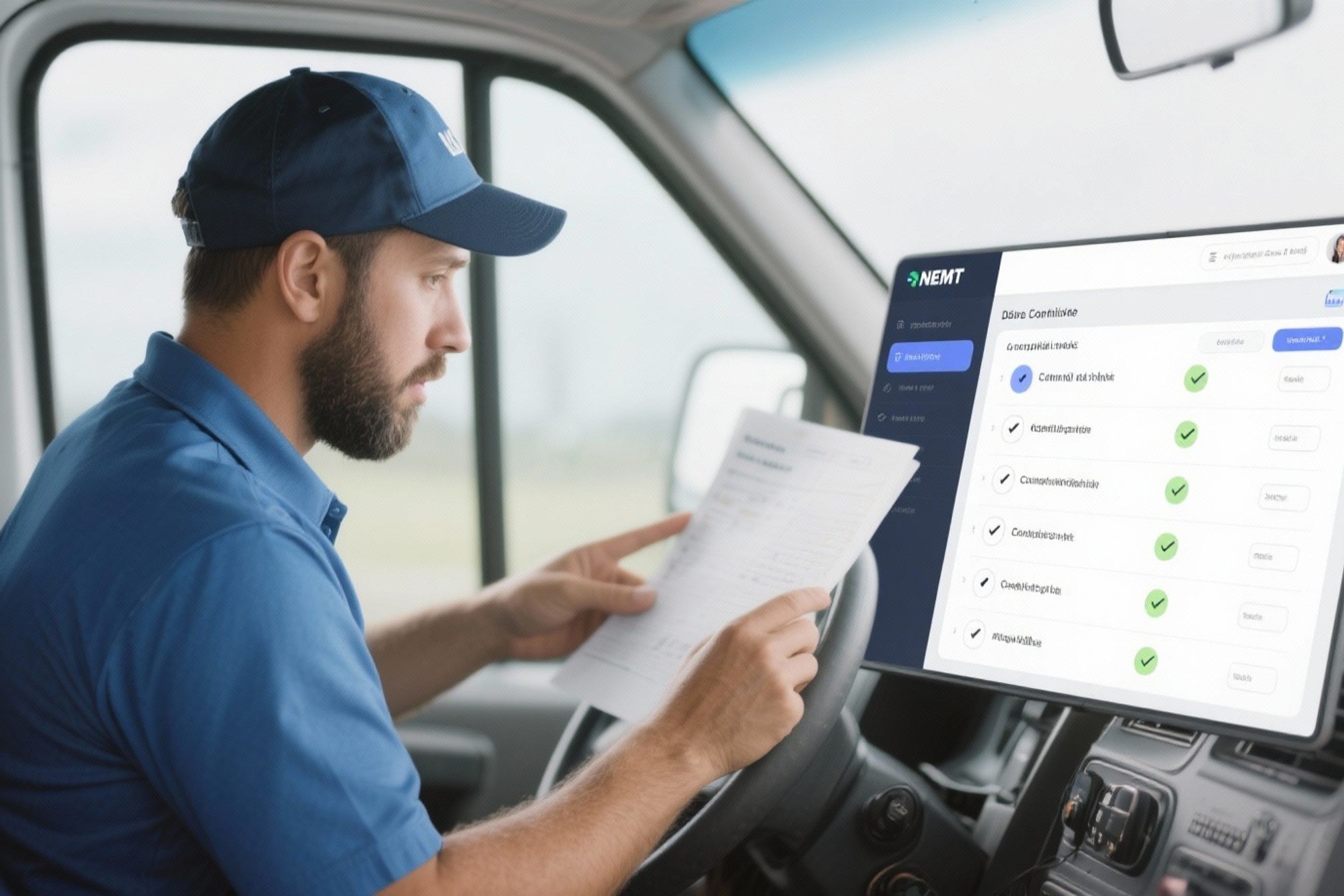
In the fast-paced world of Non-Emergency Medical Transportation (NEMT), ensuring compliance and safety is not just a regulatory requirement — it’s a critical factor that can directly impact service quality, patient outcomes, and business success. However, many NEMT providers face ongoing challenges that can lead to costly mistakes. In this post, we’ll highlight some of the most common compliance and safety mistakes in NEMT operations and how modern dispatch software can help you stay covered.
Mistake 1 — Failing to Track Compliance Properly
One of the most common mistakes NEMT providers make is not having a reliable system to track compliance with safety and regulatory standards. Many rely on manual methods like paper logs or spreadsheets, which are prone to human error and oversight. This can lead to serious issues such as missed safety checks, incomplete documentation, or failing to meet state or federal requirements.
Without accurate tracking, providers risk being non-compliant, which could result in fines, penalties, or even the suspension of operations. With the complexities involved in maintaining compliance across multiple clients, it’s essential to automate these processes. This is where NEMT software plays a pivotal role.
Mistake 2 — Inefficient Safety Protocols
In NEMT operations, safety protocols should always be a top priority. Unfortunately, many providers either don’t have formal safety protocols in place or rely on outdated methods that do not ensure adequate protection for both drivers and passengers. Whether it’s ensuring vehicles are properly equipped for patients with special needs or making sure drivers are trained in emergency procedures, lapses in safety protocols can have severe consequences.
For example, inadequate training or lack of regular safety checks can lead to accidents or violations that harm the reputation of the service provider and compromise patient safety. NEMT software, particularly platforms like the NEMT Platform, integrates safety checks directly into the system, ensuring that vehicles and drivers are always ready for safe service. It automates safety reminders and compliance checks, reducing the risk of oversight.
Ready to streamline your transportation workflow?
Discover how an all-in-one NEMT solution can automate scheduling, plan routes and simplify billing so you can focus on delivering exceptional care.
How Software Addresses These Mistakes
So, how does software help solve these issues? The NEMT Platform offers a comprehensive solution to track, manage, and streamline your compliance and safety efforts. Here's how:
- Real-time Compliance Tracking: The software automates the tracking of all necessary compliance metrics, including driver qualifications, vehicle inspections, and patient documentation. It generates reports in real time, ensuring that you’re always up-to-date with regulatory requirements.
- Safety Protocol Management: The NEMT Platform includes built-in safety checks and reminders for both drivers and vehicles. From vehicle maintenance logs to ensuring drivers complete regular safety training, the platform ensures that safety is always prioritized.
- Automated Alerts and Notifications: Get notified instantly when any compliance or safety issue arises. The software alerts dispatchers and managers if there are any overdue safety checks or compliance tasks, reducing the chance of missing critical tasks.
Real-Life Example: How NEMT Software Can Improve Compliance and Safety
Let’s consider a case where a medium-sized NEMT provider was struggling with compliance issues. They had manual tracking for vehicle maintenance and driver certifications, which led to frequent missed safety checks. After implementing the NEMT Platform, the company automated its compliance tracking and integrated real-time safety checks. Within just three months, they saw a 40% reduction in non-compliance-related incidents and improved their overall safety ratings, leading to higher customer satisfaction and fewer penalties.
Conclusion
Ensuring compliance and safety in NEMT operations is crucial not only to meet regulatory requirements but also to ensure the health and well-being of passengers and drivers. The mistakes of manual tracking and outdated safety protocols can result in serious consequences, but modern software solutions like the NEMT Platform can make these issues a thing of the past.
By automating compliance tracking, improving safety protocols, and offering real-time notifications, NEMT software helps providers stay ahead of the curve. Ready to ensure your NEMT operations are both safe and compliant?
Start your demo today and streamline your operations with the NEMT Platform.
Related Articles
Medi-Cal NEMT vs Uber/Lyft: California CalHHS Policy Guide
Medi-Cal pays for Uber and Lyft rides under the NMT benefit for ambulatory members, but wheelchair and gurney patients require a certified NEMT provider.
NEMT Billing Explained: From Trip to Paid Claim (2026)
How NEMT billing really works in 2026: the claim lifecycle, why claims get denied, EVV and compliance, and how the right billing software gets you paid faster.
Executive Guide to NEMT: Margin, Risk & Technology
For NEMT leadership: why margins are compressing, the three exposures the C-suite owns, and how technology decisions protect the P&L at enterprise scale.
Starting an NEMT Business in 2026: Where the Real Profit Comes From
NEMT operators in 2026 can reach 20-35% margins via hospital discharge contracts, stretcher and bariatric transport, long-distance trips, and private concierge accounts beyond standard broker rides.