
Table of contents▼
In non emergency medical transportation, communication shapes the entire day. A dispatcher plans the schedule. A driver faces traffic, late patients, closed entrances, and clinics that run behind. Between those two roles sits a constant need for short, clear, and timely updates. When that link breaks, the whole operation feels the impact.
Many NEMT companies still rely on phone calls, missed calls, text messages, and third party chat apps. Each option adds friction. A call rings while a driver is helping a passenger. A message gets buried under other notifications. A dispatcher waits for a reply while the schedule keeps moving.
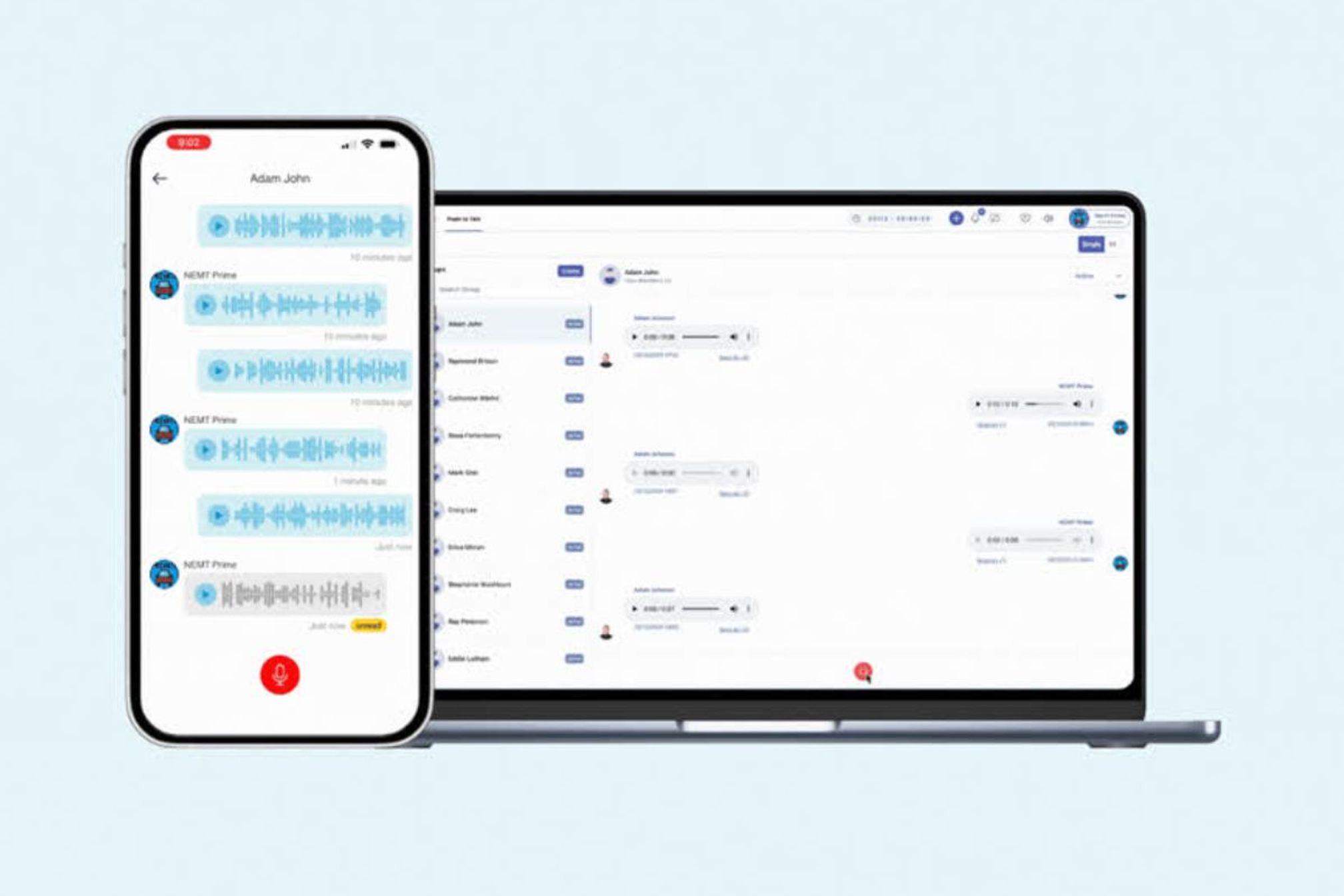
Modern NEMT software changes this picture. It brings communication into the same place where trips, drivers, and schedules already live. One of the most practical tools in this space is Push-to-Talk. It gives dispatchers and drivers a fast voice channel inside the system they already use.
This article looks at how NEMT software improves communication, why older methods fall short, and how features like Push-to-Talk create calmer, more predictable days for both sides of the operation.
The daily communication problem in NEMT operations
A typical NEMT day rarely follows the plan written the night before. A patient arrives late. A clinic runs behind. A road closes without warning. A driver finishes early and becomes available. Every one of these moments calls for a quick decision.
Dispatchers sit at the centre of this moving puzzle. They need to know where drivers are, what issues they face, and which trips need attention. Drivers need quick answers, not a long wait on hold or a chain of messages that never reach the right person.
When communication depends on phone calls alone, several problems appear:
- Calls interrupt driving or patient assistance.
- Missed calls lead to guesswork and delays.
- Dispatchers spend large parts of the day dialling numbers instead of managing trips.
- Important details get repeated, misunderstood, or lost.
Text messages solve some issues, yet they create others. Typing while driving is unsafe. Reading long messages takes time. Messages lack tone and urgency, which can turn a simple update into a long back and forth.
Third party chat apps add another layer. Drivers must switch between apps. Dispatchers must watch several screens. Information ends up scattered instead of tied to the trip where it belongs.
These tools were never built for NEMT work. They exist outside the workflow, not inside it.
What modern NEMT software changes
A proper NEMT platform does more than store trips and drivers. It becomes the place where daily work happens. Scheduling, assignments, tracking, billing, and communication sit in one system.
When communication lives inside the platform, three things improve straight away:
- Context stays attached to the trip.
- Fewer tools mean fewer mistakes.
- Speed improves without adding stress.
A dispatcher no longer needs to ask, “Which trip are you talking about?” The system already knows. A driver does not need to explain their location. The platform already shows it. That shared context removes many small frictions that slow teams down.
Voice communication fits this idea very well, since many situations need a quick sentence, not a written paragraph. This is where Push-to-Talk earns its place.
What Push-to-Talk means in an NEMT setting
Push-to-Talk works like a digital walkie talkie inside the NEMT platform. A dispatcher presses a button, speaks, and the driver hears the message at once. The driver can reply in the same way.
There is no phone number to dial. There is no app to switch. There is no long ring tone. The voice channel stays ready when work gets busy.
In practical terms, this means:
- A dispatcher can ask for a quick status update without breaking the driver’s flow.
- A driver can report a delay in one short message.
- A team can sort out small issues before they grow into missed appointments.
The biggest change is not technical. It is behavioural. People start to communicate in short, clear bursts that match the pace of the job.
Why voice still matters more than text
Text has its place. It works well for addresses, notes, or instructions that need to stay on record. Yet many NEMT moments call for speed and tone.
Consider these common situations:
- A driver reaches a pickup point and finds the patient is not ready.
- A clinic asks for a small time change.
- A dispatcher needs to confirm whether a driver can take one more nearby trip.
- A road closure forces a quick reroute.
Typing any of this takes longer than saying it. Reading it takes longer than hearing it. Voice also carries urgency and mood. A calm update sounds different from a rushed warning, and that difference guides better decisions.
Push-to-Talk keeps voice communication available without turning every update into a full phone call.
How Push-to-Talk fits into real dispatcher work
Dispatchers juggle many moving parts at once. They watch the board, handle changes, answer questions, and keep the day on track. Every extra step adds pressure.
With Push-to-Talk inside the NEMT platform, several tasks become lighter:
Faster status checks
Instead of calling a driver and waiting for an answer, a dispatcher can send a short voice message: “Are you five minutes out from the clinic?” The driver can reply between tasks without stopping to dial.
Quicker problem solving
When a patient is not ready or a location is hard to find, a short exchange can fix the issue in seconds. There is no need for a long call or a chain of texts.
Better focus on planning
Less time spent on calls means more time spent on scheduling, optimisation, and support. The dispatcher’s role shifts back toward coordination instead of chasing updates.
Ready to streamline your transportation workflow?
Discover how an all-in-one NEMT solution can automate scheduling, plan routes and simplify billing so you can focus on delivering exceptional care.
How drivers benefit from Push-to-Talk
Drivers work in motion. They drive, assist passengers, load equipment, and deal with real world conditions. Stopping to type or answer calls can feel disruptive.
Push-to-Talk respects that reality.
Fewer interruptions
A short voice message is easier to handle than a ringing phone. Drivers can listen, respond briefly, and continue their task.
Clearer instructions
Hearing a dispatcher’s voice reduces confusion. Tone and emphasis help drivers understand what matters most in that moment.
Less app switching
Since Push-to-Talk lives inside the NEMT app, drivers do not need to jump between tools. One system handles trips and communication together.
Communication tied to the trip, not floating in space
One of the quiet strengths of in-platform communication is context. When a message belongs to a trip, it makes sense to everyone involved.
Phone calls and external chats break that link. A dispatcher must remember which trip the driver meant. A driver must repeat details. Small mistakes appear during busy hours.
With NEMT software, communication stays close to the work itself. The dispatcher sees the trip. The driver sees the same trip. The message fits into that shared view.
Push-to-Talk builds on this by keeping voice updates inside the same environment.
Reducing stress during peak hours
Every NEMT operation has rush periods. Mornings, hospital discharge windows, and end of day returns can stretch any team.
During these times, slow communication causes a chain reaction:
- One late update leads to a missed slot.
- One missed slot pushes the next trip back.
- The board starts to drift away from reality.
Fast, simple voice updates help stop that slide. A dispatcher can check in. A driver can flag an issue early. Small corrections keep the schedule close to plan.
This does not remove pressure from the job, yet it keeps pressure from turning into chaos.
Training new staff becomes easier
New dispatchers and drivers often struggle with timing and communication more than with the software itself. They hesitate to call. They over explain in messages. They wait too long before reporting a problem.
Push-to-Talk offers a simple rule: speak when something changes.
New team members learn to give short, useful updates. They hear how experienced staff communicate. This shared style builds faster than written rules ever could.
Over time, the whole team develops a rhythm that matches the work.
Better records without extra work
Good NEMT software keeps logs of activity. When communication lives inside the platform, it can become part of that record.
This helps with:
- Reviewing problem trips
- Training and coaching
- Understanding where delays start
- Improving future schedules
Voice communication does not need to replace written notes. It supports them. Quick updates handle the moment. Structured notes handle the record.
Why this matters for patient experience
Behind every trip sits a person who needs care, not just transport. Late arrivals, confusion at pickup points, or rushed handovers affect how that person feels about the service.
Better communication between dispatchers and drivers leads to:
- Fewer missed or late pickups
- Calmer handovers at clinics and homes
- Faster responses when something goes wrong
Patients may never see the Push-to-Talk button, yet they feel the results of smoother coordination.
A realistic look at change
No tool fixes every problem. Push-to-Talk does not replace planning, training, or good judgement. It supports them.
The real value comes from removing small delays and small frustrations that add up over a day. When those fade, teams work with more focus and less noise.
NEMT software that treats communication as part of the core workflow, not as an add on, creates that kind of environment.
Choosing software that respects real work
When looking at NEMT platforms, it helps to ask simple questions:
- Does communication live inside the system or outside it?
- Can dispatchers and drivers speak without friction?
- Does the tool fit the pace of daily operations?
Push-to-Talk is not about fancy features. It is about matching the way people already work and giving them a cleaner path to do it.
Final thoughts
Communication shapes every NEMT day. Schedules, routes, and vehicles matter, yet without clear and fast updates, even the best plan falls apart.
Modern NEMT software brings communication back into the heart of operations. Features like Push-to-Talk give teams a simple, direct way to stay in sync without adding extra steps or extra tools.
For dispatchers, it means fewer calls and quicker decisions. For drivers, it means fewer interruptions and clearer guidance. For patients, it means a service that feels more reliable and more human.
In a field where timing and care both matter, that kind of improvement is not a luxury. It is part of doing the job well;
Related Articles
NEMT Software Modernization 2026
Mid-sized NEMT providers relying on spreadsheets and manual dispatch workflows are rapidly falling behind as the industry shifts toward AI scheduling, EVV compliance, and ride-hailing integrations. This guide explains why software modernization is now essential for maintaining broker contracts, improving margins, and meeting 2026 operational standards.
Top 5 Ways OVERSIGHT Reduces Dispatcher Errors | NEMT Platform
OVERSIGHT replaces multi-tab NEMT dispatch software with one unified screen. Real-time tracking, AI assignment, and billing automation in a single workflow.
What is OVERSIGHT? A New Era in NEMT Dispatching
OVERSIGHT is NEMT Platform's dispatch intelligence framework — real-time GPS tracking, automated scheduling, multi-broker reconciliation, and billing automation in one system. Learn how it works.
How Much Does NEMT Software Actually Cost?
How much does NEMT software actually cost? Compare per-vehicle, per-trip, and flat-rate pricing models. Discover the hidden costs of dispatching software and how to choose the right fit for your new operation.