
Table of contents▼
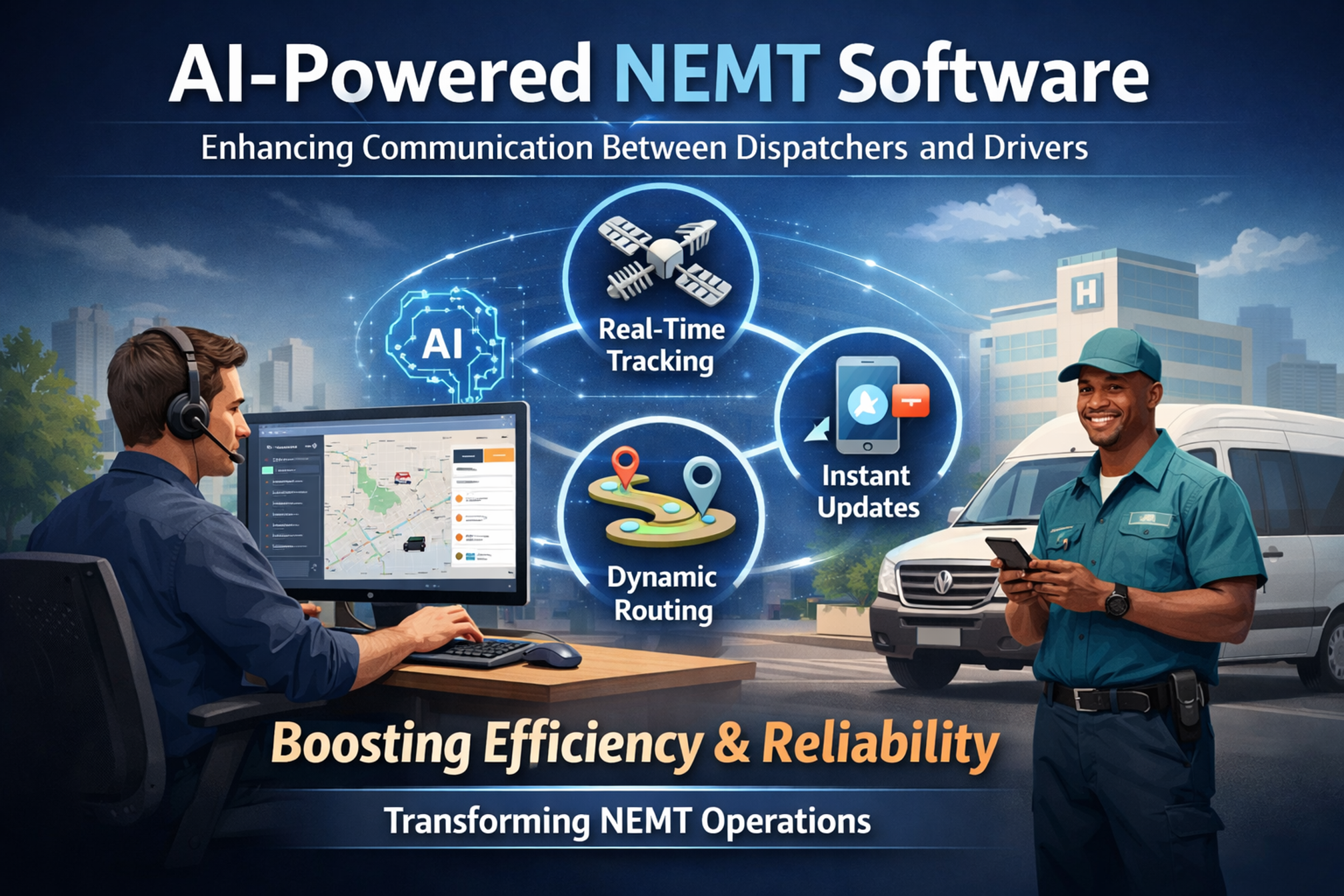
In Non‑Emergency Medical Transportation (NEMT), the relationship between dispatchers and drivers is foundational to ensuring timely, reliable, and compliant patient transport. Traditionally, dispatcher–driver communication relied on manual radio calls, fragmented text messages, or phone calls, which can be inefficient, error‑prone, and stressful especially for high‑volume operations or last‑minute trip changes. Modern NEMT dispatch software is transforming these workflows by centralising information flows, integrating real‑time updates, and enabling seamless coordination between dispatchers, drivers, and other stakeholders.
This analytical report examines how advanced NEMT technology — particularly AI‑enabled platforms and mobile apps — enhances communication between dispatch teams and drivers, leading to improved operational performance, lower costs, and superior service quality.
1. The Communication Challenge in Traditional NEMT Operations
NEMT providers operate within an inherently dynamic environment — patients’ medical appointments can shift, traffic patterns change, and regulatory requirements evolve. In such a landscape, dispatchers are tasked with allocating drivers, managing route changes, and ensuring on‑time arrivals. Historically, communication has been constrained by:
- Manual phone calls or radio transmissions, which can be misheard or delayed
- Limited access to real‑time trip information for drivers
- Scattered data across systems, leading to misaligned expectations
- Batch updates instead of instantaneous interactions
These limitations not only increase operational friction but also elevate the risk of missed or late trips, driver burnout, and patient dissatisfaction.
2. NEMT Dispatch Software: A Modern Communication Hub
At its core, NEMT dispatch software functions as an integrated operational platform that brings essential communication tools under one roof — combining scheduling, routing, real‑time tracking, driver messaging, and automated alerts. These systems establish a centralised source of truth for both dispatchers and drivers, reducing ambiguity and streamlining information exchange. nemtplatform.com
According to industry software overviews, effective NEMT platforms integrate:
- Real‑time GPS tracking and trip status: Dispatchers have visibility into driver locations and can proactively adjust plans before issues escalate. nemtplatform.com
- Mobile driver apps: Drivers receive immediate trip assignments, route adjustments, and updates without reliance on external channels.
- Automated notifications: Both dispatchers and drivers are informed of changes as they happen, minimising missed messages. nemtplatform.com
- Two‑way communication channels within the platform, enabling safe, documented exchanges.
By embedding these features into a unified system, NEMT software removes friction from daily operations, improves situational awareness, and creates a shared operational context between dispatchers and drivers.
3. Real‑Time Communication and Dispatcher‑Driver Coordination
3.1 Instant Trip Assignments and Updates
Traditional dispatch might require a driver to call in for assignments or wait for periodic updates. With dedicated NEMT software, dispatchers can push assignments directly to drivers’ mobile apps or in‑cab devices with all relevant details — including rider information, pickup time, destination, and special instructions — in a matter of seconds. This not only accelerates response times but also ensures clarity of expectations. nemtplatform.com
3.2 Dynamic Change Management
NEMT operations often contend with last‑minute changes due to cancellations, traffic issues, or patient delays. When dispatchers adjust schedules using advanced software, drivers are notified instantly with updated directions and changes reflected in their apps. Real‑time notifications significantly reduce confusion and help maintain service quality even when circumstances shift.
3.3 Reducing Miscommunication Through Centralisation
By consolidating scheduling, messaging, navigation, and compliance alerts in one interface, the chances of missed updates or mismatches fall dramatically. Drivers no longer need to interpret messages from disparate channels, and dispatchers can broadcast updates via structured workflows that are logged and auditable.
Ready to streamline your transportation workflow?
Discover how an all-in-one NEMT solution can automate scheduling, plan routes and simplify billing so you can focus on delivering exceptional care.
4. Enhancing Efficiency and Driver Experience
NEMT software not only improves communication on a transactional level but also enhances overall driver experience — which is crucial for retention and performance.
4.1 Personalized Driver Interfaces
Mobile driver apps present trip manifests, navigation, and messages tailored to an individual driver’s schedule. This clarity reduces cognitive load and allows drivers to focus on safety and patient care rather than administrative tasks.
4.2 Route Guidance and Compliance Support
Integrated GPS and routing tools ensure drivers follow optimal paths, and dispatchers can monitor progress in real time. When unexpected conditions arise, such as traffic congestion or detours, dispatch teams can communicate alternative instructions immediately, all within the software interface.
4.3 Less Manual Coordination
Rather than manually calling or texting multiple drivers about changes, dispatchers can update information once in the system and simultaneously notify all affected parties. This streamlined flow reduces redundancy and human error and improves staff productivity. nemtplatform.com
5. Impact on Operational Outcomes and Patient Satisfaction
Improved communication between dispatchers and drivers yields visible benefits across key performance indicators:
- Fewer missed appointments and late trips: Clear, timely messaging ensures drivers know exactly when and where to be.
- Higher on‑time performance: Dispatchers can support drivers with real‑time rerouting during disruptions, improving reliability.
- Reduced operational costs: By decreasing idle time and confusion, fleets are more efficient, leading to lower fuel costs and better driver utilisation.
- Enhanced patient trust: When NEMT teams communicate effectively, patients receive more predictable service and fewer surprises.
Importantly, real‑time communication tools also support compliance with broker and payer requirements, as detailed logs and timely updates create a transparent audit trail.
6. The Role of AI and Advanced Dispatch Features
While core NEMT software brings significant improvements, the integration of AI dispatchers and intelligent automation takes communication to the next level. AI can assist by:
- Predicting potential delays and alerting drivers and dispatchers in advance
- Suggesting optimal routes based on traffic and trip history
- Automating routine notifications or status updates to drivers at the right time
- Reducing dispatcher workload by handling repetitive messaging tasks
AI‑based features create a more proactive and resilient communication ecosystem within the NEMT platform. nemtplatform.com
7. Real‑World Integration with NEMT Platforms
Modern NEMT providers benefit from platforms that combine scheduling, dispatch, driver apps, and analytics in one place. For example, solutions like NEMT Platform offer dedicated mobile applications for drivers, real‑time trip updates, route optimisation, and streamlined communication channels — all supported by an integrated backend that supports dispatchers in their daily workflows. nemtplatform.com
These integrated systems make it easier to scale operations, respond to real‑time conditions, and maintain high service standards without increasing headcount.
Conclusion
Communication between dispatchers and drivers has historically been a bottleneck in NEMT operations due to fragmented channels, delayed updates, and manual dependencies. Modern NEMT dispatch software — especially those powered by AI and real‑time mobile tools — bridges these gaps by centralising information, enabling instant updates, and supporting two‑way interaction in structured, audit‑ready interfaces.
As NEMT operations scale and demand continues to grow, the ability to maintain effective communication across the entire dispatch cycle becomes a competitive advantage — improving driver satisfaction, operational performance, and patient outcomes.
To explore how integrated AI‑enabled dispatch and communication tools can transform your NEMT operations, learn more at NEMT Platform and schedule a demo:
👉 https://nemtplatform.com/
👉 https://nemtplatform.com/schedule
Related Articles
How to Do Long Trips and Make More Money in NEMT
Long-distance NEMT trips are the fastest way to increase per-trip revenue. This guide shows you how to build a long-trip business model, where to find the contracts, and how to structure your operations so distance runs stay profitable.
How to Start a Profitable NEMT Business
Profitability in NEMT comes from three things: controlled startup costs, consistent broker contracts, and operational efficiency. Miss any one and you'll spend the first 18 months losing money. This guide walks you through the steps and shows you where the real money leaks happen.
NEMT vs. Uber Health vs. Lyft Healthcare: What's the Difference and When to Use Each
NEMT, Uber Health, and Lyft cover different patient needs. Use specialised NEMT for wheelchair, bariatric, or Medicaid trips. Use rideshare only for ambulatory, low-acuity rides.
How to Buy an Existing NEMT Business: Due Diligence Checklist
Buying an NEMT business? Check finances, fleet, Medicaid IDs, and broker contracts. California buyers must verify Medi-Cal enrollment and CHP inspections before close.