
Table of contents▼
No-shows remain one of the most persistent operational problems across healthcare, non-emergency medical transportation, home services, and appointment-driven businesses. A single missed appointment wastes time, blocks revenue, disrupts schedules, and often triggers a chain reaction that affects the entire day.
Traditionally, businesses attempted to solve this problem by hiring more front-desk staff or outsourcing call handling. Both approaches increase costs and still leave gaps outside business hours. AI receptionists offer a different approach. They operate continuously, respond instantly, and manage appointment communication at scale.
This article explains how AI receptionists reduce no-shows without adding staff, what features matter most, and how businesses see measurable improvements within weeks of deployment.
Understanding the Real Cost of No-Shows
No-shows are often underestimated because their impact is spread across multiple areas rather than appearing as a single expense.
Direct financial loss
Every missed appointment represents lost revenue that cannot be recovered. In healthcare and transportation, unused time slots rarely get refilled on short notice.
Operational disruption
Schedules are built assuming attendance. When a client does not show up, staff time, vehicles, or equipment remain idle while other customers wait.
Administrative overhead
Manual follow-ups, rescheduling calls, and record updates add work for already busy teams.
Customer trust erosion
Repeated missed appointments reduce reliability, which affects long-term relationships and ratings.
Reducing no-shows is not only about reminders. It requires consistent, timely, and frictionless communication.
Why Traditional Reminder Systems Fall Short
Many organisations already use SMS or email reminders. While helpful, these tools have limitations.
- Messages are often ignored or lost in crowded inboxes
- Clients cannot easily respond with changes
- Follow-ups require staff intervention
- Reminders usually stop after office hours
Static reminder systems notify. They do not converse. No-shows are rarely caused by forgetfulness alone. Confusion, last-minute conflicts, unanswered questions, or difficulty rescheduling play a major role.
What Is an AI Receptionist
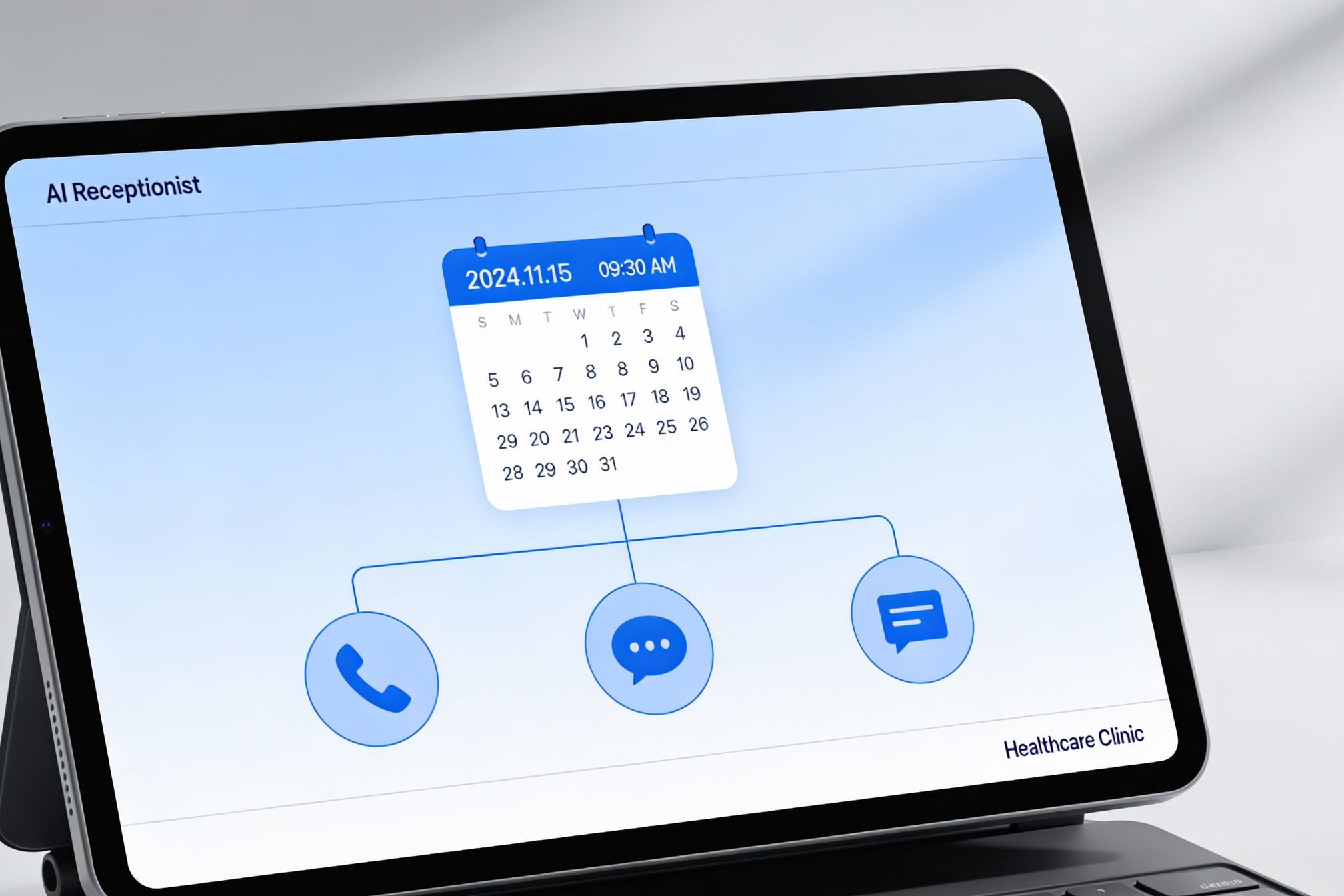
An AI receptionist is an automated voice and messaging system powered by conversational artificial intelligence. Unlike basic IVR or chatbots, AI receptionists understand natural language, manage multi-step conversations, and connect directly with scheduling systems.
They can answer calls, send messages, confirm appointments, handle reschedules, and log interactions automatically.
In platforms such as NEMT Platform, AI receptionists are designed specifically for appointment-critical workflows where missed engagements carry high operational costs.
How AI Receptionists Reduce No-Shows
AI receptionists reduce no-shows by addressing the root causes rather than treating symptoms.
1. Proactive Appointment Confirmation
Instead of sending a single reminder, AI receptionists actively confirm appointments.
- Calls or messages go out at configurable intervals
- Clients are asked to confirm, cancel, or reschedule
- Unconfirmed appointments trigger follow-ups automatically
This creates accountability. When clients confirm verbally or through chat, attendance rates increase significantly.
2. Two-Way Conversations Instead of One-Way Alerts
AI receptionists engage in dialogue.
A client can say they are running late, need clarification, or want to move the appointment. The system responds immediately without placing the burden on staff.
This removes friction. When rescheduling is easy, clients are far less likely to disappear.
3. 24/7 Availability
Many no-shows occur because clients try to reach an office after hours and fail.
AI receptionists are always available.
- Late-night cancellations are recorded
- Early-morning confirmations are handled
- Emergency changes are processed instantly
By eliminating time barriers, AI receptionists prevent silent no-shows caused by unanswered calls.
4. Intelligent Rescheduling Before the Appointment
When a client signals uncertainty, AI receptionists can intervene early.
They can propose alternate times, check availability, and complete the reschedule instantly. This frees the original slot for rebooking and avoids wasted capacity.
Manual teams rarely have the time or coverage to do this consistently.
5. Real-Time Answers to Common Questions
Clients often skip appointments due to unanswered questions.
Examples include:
- Where is the pickup point
- What documents are required
- How early should they arrive
- What happens if they are late
AI receptionists answer these questions immediately, removing uncertainty that leads to avoidance.
6. Multi-Channel Outreach
Different clients prefer different communication channels.
AI receptionists operate across:
- Voice calls
- SMS
- WhatsApp or similar messaging platforms
- Web chat
Reaching clients on their preferred channel increases response rates and reduces missed appointments.
7. Automated Escalation When Needed
AI receptionists handle routine interactions but escalate edge cases.
If a client requests special handling or shows repeated uncertainty, the system can notify staff with full context. This targeted escalation is far more efficient than blanket manual follow-ups.
Real-World Impact Across Industries
Healthcare clinics
Clinics using AI receptionists report fewer missed consultations and better schedule utilisation. Automated confirmations and real-time rescheduling significantly reduce gaps.
Non-Emergency Medical Transportation
Transportation providers face high no-show costs due to vehicle and driver allocation. AI receptionists confirm rides, manage cancellations, and prevent wasted trips.
Home services
Plumbers, electricians, and maintenance teams rely on punctual attendance. AI receptionists reduce last-minute cancellations and keep daily routes intact.
Professional services
Consultants and advisors benefit from higher attendance and fewer calendar disruptions.
Why AI Receptionists Work Better Than Hiring More Staff
Hiring additional staff increases fixed costs and still does not guarantee coverage at all hours. Human teams struggle with consistency, fatigue, and scale.
AI receptionists provide:
- Consistent execution every time
- Instant response without queues
- Predictable operating costs
- Seamless scaling as volume grows
Rather than replacing staff, AI receptionists protect staff time by handling repetitive communication.
Data, Tracking, and Continuous Improvement
Modern AI receptionist systems track every interaction.
- Confirmation rates
- Cancellation reasons
- Reschedule timing
- Channel effectiveness
This data reveals patterns that manual processes never capture. Businesses can adjust reminder timing, messaging tone, and workflows based on real behaviour.
Over time, no-show rates continue to decline because the system adapts.
Common Misconceptions About AI Receptionists
Clients prefer humans
In reality, clients prefer fast answers. When AI handles routine tasks smoothly, satisfaction improves.
AI sounds robotic
Modern conversational AI uses natural speech patterns and context awareness. Many clients do not realise they are speaking with an AI.
Setup is complex
Most AI receptionist platforms integrate directly with existing scheduling systems. Deployment often takes days rather than months.
Implementation Best Practices
- Define clear confirmation and cancellation rules
- Use multiple touchpoints rather than a single reminder
- Allow easy rescheduling without friction
- Monitor early performance metrics
- Refine scripts based on real interactions
Successful implementation focuses on conversation quality, not just automation.
The Long-Term Effect on Operations
Reducing no-shows creates a compounding benefit.
- Higher revenue without additional sales
- Better staff morale
- More predictable schedules
- Improved customer trust
Over time, businesses shift from reactive scheduling to proactive capacity management.
The Future of Appointment Management
AI receptionists are evolving beyond reminders.
Upcoming capabilities include:
- Predictive no-show detection
- Personalised reminder timing
- Sentiment-based escalation
- Integration with billing and compliance systems
As these systems mature, no-shows will become the exception rather than the norm.
Conclusion
No-shows are not inevitable. They are often the result of poor communication, limited availability, and manual constraints.
AI receptionists solve these problems at the system level. By confirming appointments, enabling real-time rescheduling, answering questions instantly, and operating around the clock, they reduce missed appointments without increasing staff.
For appointment-driven organisations, AI receptionists are no longer a convenience. They are a critical operational layer that protects revenue, time, and customer relationships.
Related Articles
Best NEMT Software for California Transportation Providers: Medi-Cal, Multi-Broker, and Fleet Automation
Discover why NEMT Platform is the best NEMT software in California, offering live OVERSIGHT dispatch, multi-broker auto-billing, and a 24/7 multilingual AI receptionist.
From 1 to 42 Vehicles: How NEMT Platform helped Jimmy Built a $4.8M Empire
J&Tig Transportation grew a single-vehicle NEMT operation into a 42-vehicle, $4.8M business in Virginia. Learn the exact strategies they used, including broker volume pricing, driver retention, and billing automation that cut admin time by 66%.
Olivia AI Receptionist: How It Assists NEMT Providers with Calls and Improves Efficiency
Olivia AI Receptionist automates call management, trip scheduling, and client inquiries, improving efficiency and customer satisfaction for NEMT providers—24/7, accurate, and seamless.
How AI Receptionists are Redefining Customer Experience in NEMT
AI receptionists are transforming NEMT by automating calls, providing real-time updates, and offering 24/7 support. With multilingual capabilities and seamless integration, they improve efficiency, cut costs, and enhance patient satisfaction.