
Table of contents▼
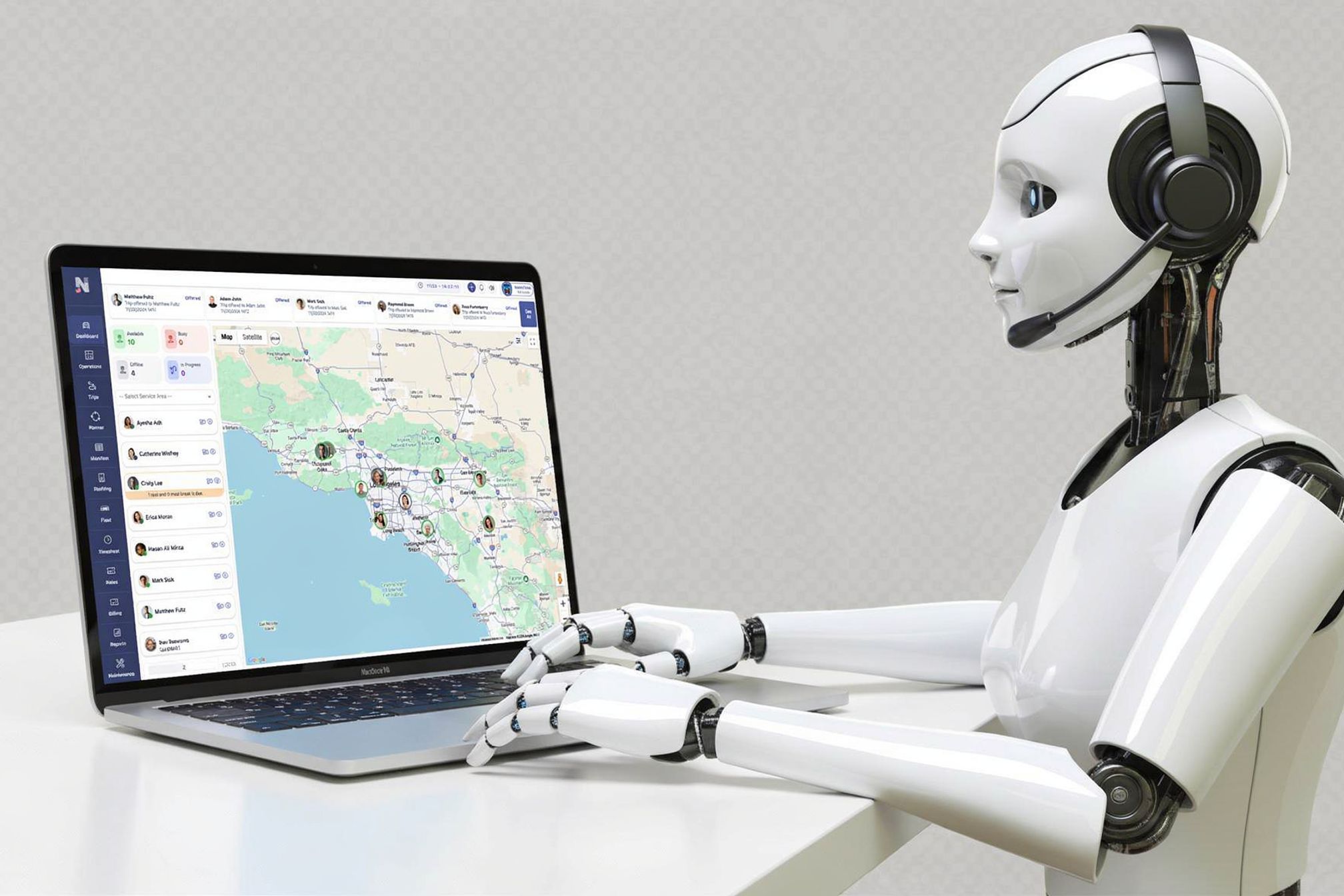
In the world of non‑emergency medical transportation (NEMT), every minute counts. From managing trips to routing drivers and keeping track of revenue and performance, running operations manually is slow, error‑prone, and costly. That’s where modern tools step in. Among the most impactful advancements is the AI Dispatcher in NEMT workflows, a solution that fundamentally changes how transportation providers plan, operate, and grow.
In this article, we will take a deep look at what an ai dispatcher is, how it works, the real benefits it brings to NEMT operators, and why systems powered by ai dispatcher ai planning and ai route optimization are quickly becoming essential to efficient, scalable operations.
We’ll walk through the key features of this technology and explain how each piece adds value. You’ll also see where automation should take the lead and where human expertise still shines — the ideal balance for performance and customer satisfaction.
If you want to explore a complete NEMT AI dispatcher solution, check out https://nemtplatform.com/ — the platform built for modern providers looking to transform operations with intelligent automation.
What Is an AI Dispatcher in NEMT?
At its core, an AI dispatcher is software powered by artificial intelligence designed to manage much of the operational workload that dispatch teams handle every day. Instead of assigning trips manually, juggling schedules in spreadsheets, or reacting to delays after the fact, an ai dispatcher uses algorithms and real‑time data to automate those decisions.
In traditional settings, dispatchers spend hours deciding which driver should take a job, planning routes, checking traffic, and communicating with drivers. With automation, these tasks are handled instantly, intelligently, and without fatigue or guesswork.
For NEMT providers, this means:
- Faster decision‑making
- Fewer scheduling conflicts
- Better use of vehicle and driver resources
- Reduced operational cost
- Higher service reliability
Now let’s break down how this technology works and the features that make it so powerful.
How AI Dispatching Works
An effective AI Dispatcher in NEMT does more than assign trips. It takes into account a variety of real‑time factors and historical data to make decisions that would take humans hours to analyze.
Here’s a simplified flow of how ai dispatching typically works:
1. Real‑Time Data Collection
The system receives information from multiple sources:
- Driver availability and status
- GPS location of vehicles
- Trip requests and appointment windows
- Traffic and road conditions
- Historical performance and patterns
All of this input feeds into the AI in real time so decisions are based on the current situation, not outdated reports.
2. Intelligent Trip Matching
Instead of a dispatcher scanning lists and assigning manually, the system determines the best driver for a job. It considers:
- Proximity to the pickup location
- Driver skill or certification
- Time windows for pickups and drop‑offs
- Service priorities (for example, urgent medical appointments)
This saves time and improves service reliability.
3. ai route optimization
Once drivers are matched with trips, the system uses ai route optimization techniques to plot the most efficient path. This includes evaluating:
- Current traffic congestion
- Construction or road closures
- Trip urgency
- Estimated time of arrival (ETA) expectations
All of this helps reduce fuel use, lower idle time, and support on‑time performance.
4. Continuous Learning
Over time, the AI learns from new data. Patterns that repeat — such as traffic slowdowns at certain hours or driver preferences — become part of future planning. With every trip, the system becomes more accurate and predictive, improving dispatch outcomes.
Key Features of an AI Dispatcher for NEMT Providers
A great ai dispatcher solution is not just about automation — it’s about empowering teams with visibility, insight, and precision. Below are the major features that matter most:
1. Automated Trip Dispatching
An AI dispatcher automates assignment of trips rather than leaving this to manual staff effort. This reduces human error, speeds up decisions, and ensures that each trip is given to the driver best able to complete it.
Drivers don’t wait for instructions, and dispatchers don’t need to manually search lists or shuffle assignments.
Automation handles:
- Trip assignments
- Reassignments when drivers are delayed
- Prioritizing trips with tight windows
This leads to streamlined schedules with much less back‑and‑forth coordination.
2. Smart Trip Planning
Not all routes are equal. Smart planning uses AI to build routes that consider many factors simultaneously.
At the heart of this is ai route optimization — a process by which the system compares thousands of possible route combinations and selects the most efficient one. It helps accomplish:
- Shorter travel distances
- Reduced idle time
- Fewer late arrivals
- Improved fuel efficiency
For NEMT providers, this means drivers can complete more trips each day with fewer interruptions.
3. Real‑Time Vehicle Tracking
Tracking is essential in transportation. An AI dispatcher pulls vehicle location data in real time so dispatch teams always know where every resource is.
This makes it possible to:
- Provide accurate ETAs to patients
- Update families or providers on arrival status
- React quickly when a driver is delayed
- Reassign trips if needed
Tracking not only improves service quality, it dramatically improves transparency and communication.
4. Performance Insights and Analytics
Data is powerful, but only if you can understand it. AI dispatchers generate dashboards and reports that show patterns like:
- Which drivers are most efficient
- Trip completion rates
- Cancellation trends
- Revenue per route
- Broker performance
These analytics empower NEMT owners to make informed decisions, plan staffing, and improve operations systematically.
5. Alerts and Notifications
Waiting for someone to notice a delay or a missed trip is not good service. Modern dispatchers provide alerts so teams are always informed.
Common alerts include:
- Late departures
- Traffic delays
- Missed pickups
- Driver status changes
Instant notifications allow teams to react quickly and keep operations running smoothly.
6. Billing and Invoicing Support
AI dispatchers often integrate billing features that link automatically to trip logs. This makes invoicing faster, more accurate, and less reliant on manual data entry.
Automation here improves:
- Accuracy of billing
- Time to produce invoices
- Financial reporting clarity
Providers can focus more on service and less on spreadsheets.
7. Flexible Trip Modifications
Sometimes trips change. A patient may cancel, reschedule, or request a reroute.
An AI dispatcher adapts instantly. Instead of waiting for a human to redraw plans, the system automatically:
- Adjusts schedules
- Updates drivers
- Reroutes nearby vehicles
- Notifies affected passengers
This dynamic responsiveness improves satisfaction and reduces confusion.
Benefits of Using AI Dispatching in NEMT
When you adopt an AI dispatcher in NEMT, the benefits compound quickly. Here is what NEMT owners and providers commonly experience:
Faster Decisions
AI processes information faster than humans and can dispatch instantly.
Improved Reliability
Route planning and assignment accuracy reduce late or missed trips.
Lower Operational Costs
Optimized routing and better fleet utilization decrease fuel consumption and overtime.
Greater Customer Satisfaction
Patients get accurate ETAs, real‑time updates, and reliable service every time.
Actionable Insights
Data analytics help teams improve performance and make strategic decisions.
Scalability
Whether you’re handling ten or a hundred trips per day, AI scales without adding staff.
Why AI Makes Such a Big Difference
A key strength of AI is its ability to absorb patterns and improve over time. For example:
- If certain routes are consistently slower at specific hours, the system learns and adjusts future planning.
- If a driver has a history of preferring certain types of trips or areas, AI incorporates that into its matching logic.
- If cancellations spike on certain days, the system flags this and helps plan proactively.
This ongoing cycle of learning and adapting is something manual dispatching can’t match.
Plus, AI doesn’t get tired or overlook details. It continuously processes massive data sets to produce outcomes that are more accurate and consistent than human dispatchers could manage alone.
How to Get Started with an AI Dispatcher
If you’re considering adding an AI dispatcher to your NEMT operations:
- Review your current workflows: Map out what your team does now.
- Identify bottlenecks: Where are manual decisions slowing you down?
- Choose a platform with strong AI dispatching and ai route optimization capabilities:
Explore solutions like https://nemtplatform.com/ that are designed specifically for NEMT providers. - Train your team: Make sure dispatchers understand how the system works so they can use it effectively.
- Measure impact: After implementation, track efficiency, customer satisfaction, cost savings, and revenue growth.
Final Thoughts
The shift to automated, AI‑powered operations in NEMT is more than a trend — it’s a shift toward smarter, more efficient approaches to transportation logistics. An AI dispatcher offers real‑time responsiveness, improved planning through ai dispatcher ai planning logic, and intelligent routing via ai route optimization.
By combining human expertise with advanced automation, NEMT providers can serve more patients, reduce operational strain, and build stronger, more responsive businesses.
If you’re ready to see what AI can do for your dispatch operations, explore the tools and solutions at https://nemtplatform.com/ and take the first step toward a more efficient, intelligent future.
Related Articles
Enterprise NEMT Software: Run 100+ Vehicles on One System
For NEMT providers running 100+ vehicles across multiple locations, fragmented systems drain margin. How enterprise NEMT software unifies the operation.
Multi-State Compliance Automation for Large NEMT Fleets: How to Eliminate Audit Risk at Scale
Large NEMT fleets operating across multiple states face serious audit risk. Learn how compliance automation protects your revenue, contracts, and license to operate.
Stop Doing Manual Routing: Teya Miles Shares the Roadmap to NEMT Success
Teya Miles, known as That NEMT Girl, shares her transition from a struggling property manager to a successful NEMT coach. This post details the operational costs of manual routing and how AI voice bots like Olivia solve the professionalism gap. Learn why compliance is the new industry currency and get practical advice on building a technology budget to scale your transportation business in 2026.
How to Scale Your NEMT Business: Teya Miles on Solving Pain Points with AI and Automation
Teya Miles, known as That NEMT Girl, shares how she transitioned from manual routing to a tech-driven fleet. This post explores common industry pain points like midnight scheduling and unprofessional dispatching. By implementing AI tools like Olivia and automated routing, Teya reduced her admin work from hours to minutes. Learn her specific strategies for maintaining compliance, optimizing payroll, and scaling your NEMT operation using modern automation.